Value of training and drills
- Explain the importance of training and drills
- Personnel must familiarize themselves as soon as possible after joining a ship with: – Meaning of emergency signals – Instructions on the muster list and their duties – Location and use of life-saving equipment – Escape routes and equipment – Means provided for survival on ship and survival craft
Personal protective clothing and equipment
- Don a lifejacket
- Don an immersion suit / anti-exposure suit
- Don a thermal protective aid
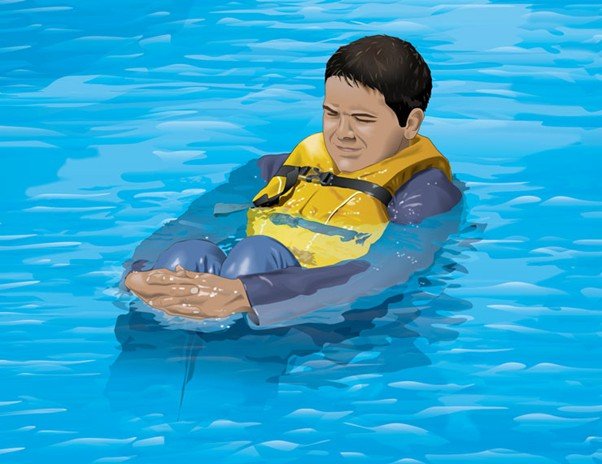
Survival Steps If You Cannot Get Out of the Water
Need to be ready for any emergency
- State the need to be prepared to use personal survival techniques at any time
- Recognize the duty allocated in the muster list
Actions to be taken when called to survival craft stations
- List and carry out the actions when called to survival craft stations
Actions to be taken when required to abandon ship
- List actions to be taken when required to abandon ship
- Board survival craft from the ship
- Safely jump from a height into the water (wearing lifejacket or immersion suit)
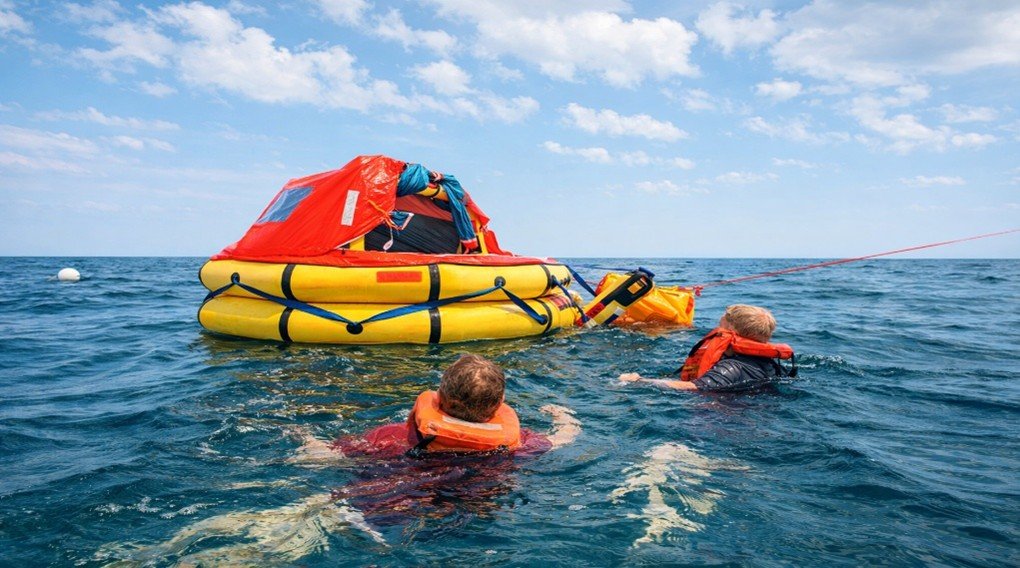
Launching and boarding a life raft
Actions to be taken when in the water
- List actions to be taken when in the water
- Swim while wearing a lifejacket
- Swim while wearing an immersion suit
- Keep afloat without a lifejacket
- Right an inverted liferaft while wearing a lifejacket
- Right an inverted liferaft while wearing an immersion suit
- Board survival craft from the water while wearing a lifejacket
- Board survival craft from the water while wearing an immersion suit
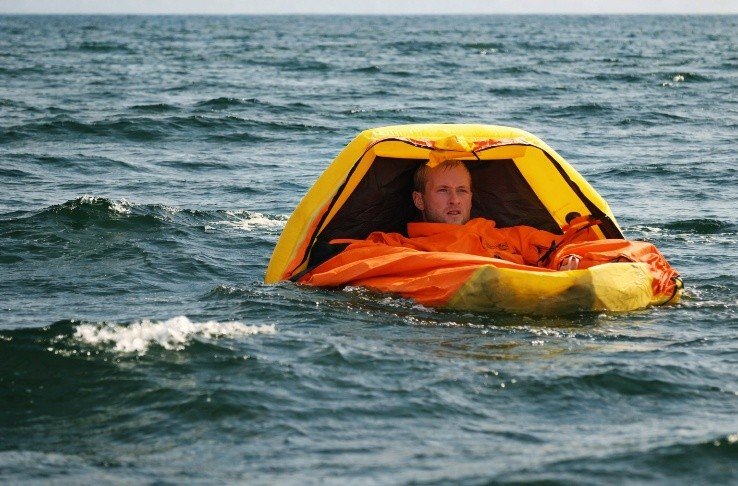
ISPLR – Inflatable Military Life Raft
Actions to be taken when aboard a survival craft
- List actions to be taken when aboard a survival craft
- Take initial actions on boarding survival craft to enhance chance of survival
- Stream a drogue or sea-anchor
- Operate survival craft equipment
- Operate location devices including the radio equipment (EPIRB, SART, 2-way VHF)
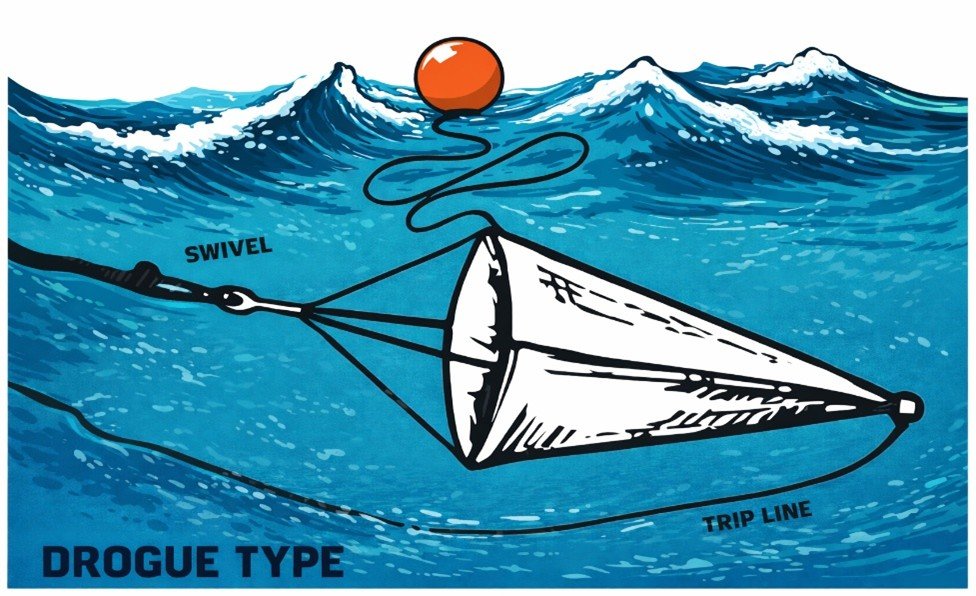
WHEN THE WIND GETS SCARY – Small Craft Advisor
Main dangers to survivors (Very important for exams) Describe main dangers and relevant precautions for:
- Heat stroke, sun stroke, exposure to cold, frostbite/frostnip, cold shock and hypothermia
- Effects of seasickness
- Secondary drowning
- Failure to maintain body fluids correctly, causing dehydration
- Drinking seawater
- Fire or oil on water
- Dangerous marine organisms