
The patient should be kept in the position that best provides relief from his injuries. Usually this is a lying-down position, which increases circulation of the blood to the head.
For an unconscious patient, turn him face down, head to one side; no pillows should be used under the head. Pull up the leg and the arm on the side to which the head is facing, pull up the chin. Stretch other arm out, as shown. His clothes should be loosened at the neck and waist, and any artificial teeth removed.
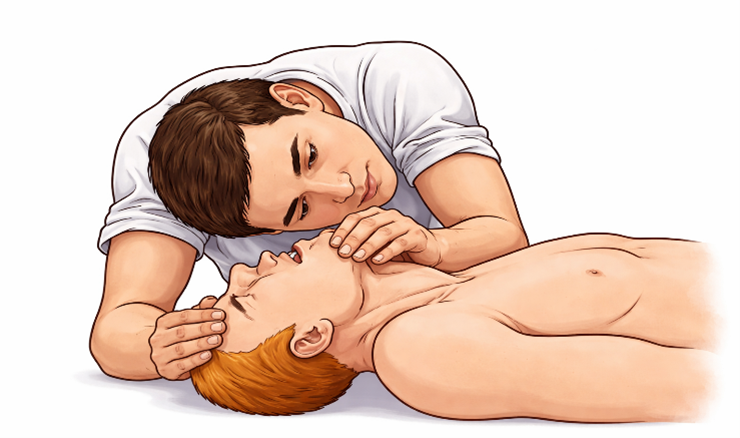
In the case of breathing difficulties, the patient should be placed in a half-sitting position, leaning back or leaning forward, or in the high sitting-up position. It is particularly important that a casualty showing signs of pulmonary oedema should be placed in the high sitting-up position.
For chest injuries, a casualty should be placed leaning towards the injured side to localize bleeding and fluid and to allow the good side to work freely.
The patient should not be moved if injuries of the neck or spine are suspected. Fractures should be splinted before moving a patient. No attempt should be made to set a fracture.