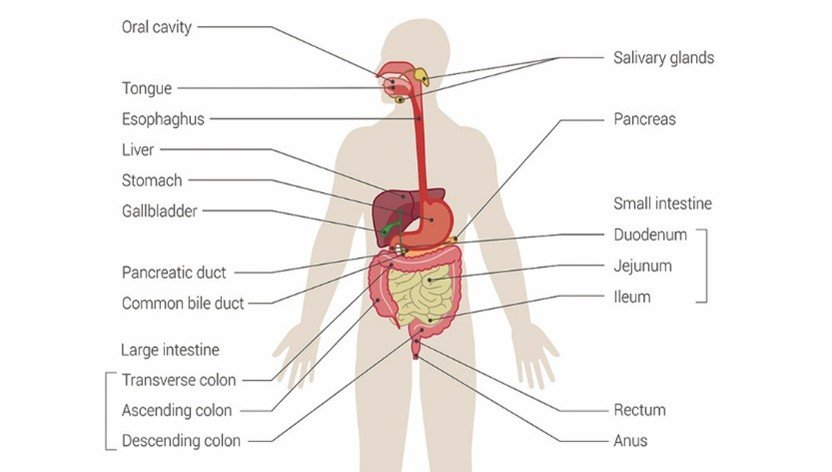
The skelton system: The skull forms a case that contains and protects the brain. It consists of many bones, firmly joined to one another except for the lower jaw, which moves at joints just in front of the ears. The skull rests on the upper end of the backbone, which is made up of a series of small bones placed on top of each other. These bones are called vertebrae and collectively compose the spinal column, within which is housed the spinal cord; nerves emerge from the cord at the level of each vertebra.
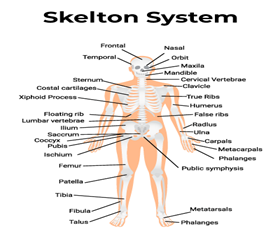
The muscular system: Voluntary muscles are found in the head, neck, limbs, back, and walls of the abdomen. They are attached to bones by fibrous tissue which is frequently in the form of a cord and is then called a tendon or leader. When a muscle contracts in response to an impulse sent to it through a nerve, it becomes shorter and thicker and draws the bones to which it is attached nearer to one another.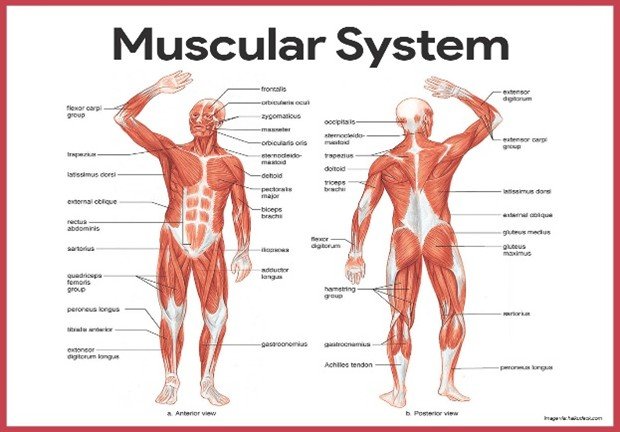
The circulatory system: The body contains about five litres of blood, which circulates to all the tissues of the body. It is kept moving round the body by the heart, a muscular pump about the size of a clenched fist situated in the chest behind the breastbone, lying between the lungs, rather more on the left than on the right. The arteries are like thick-walled tubes and decrease in diameter away from the heart.
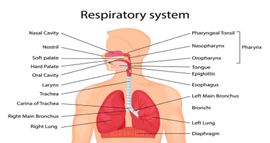
The respiratory system: Every time a breath is taken, the air (containing oxygen) passes through the nose or mouth and past the larynx or voice-box into the windpipe. The windpipe divides into two main tubes called bronchi, each of which then divides up into many smaller bronchial tubes that pass
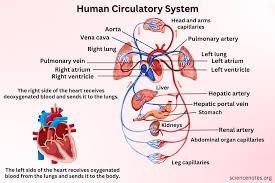
The digestive system: Food in the mouth is broken up by chewing and tongue movements and mixed with saliva (spittle), which lubricates it and starts the digestive processes. When it is in a suitable state it passes to the back of the throat, where muscular action forces it down the oesophagus, or gullet, a muscular tube in the neck behind the windpipe.