
The causes of unconsciousness are many and are often difficult to determine Treatment varies with the cause, but in first aid it is usually not possible to make a diagnosis of the cause, let alone undertake treatment.
The immediate threat to life may be: breathing obstructed by the tongue falling back and blocking the throat; stopped heart.
With an unconscious patient, first listen for breathing. To relieve obstructed breathing, tilt the head firmly backwards as far as it will go
Listen and feel for any movement of air, because the chest and abdomen may move in the presence of an obstructed airway, without moving air.
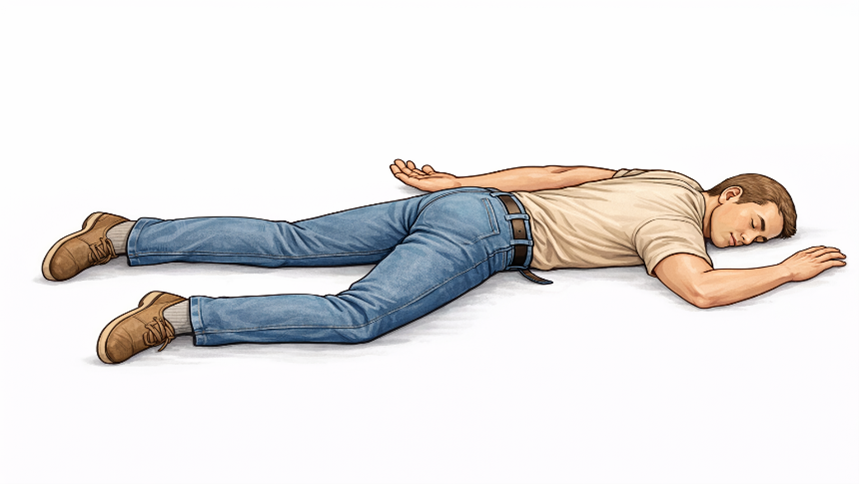
Next, listen for heart sounds. Feel pulse at wrist and neck
Check the pupils of the eyes to see if they are dilated or constricted. When the heart stops beating, the pupils will begin to dilate within 45-60 seconds. They will stay dilated and will not react to light.
If the casualty is not breathing but the heart has not stopped, open mouth and ensure the airway is clear. Begin artificial respiration at once.
If the casualty is not breathing and the heart has stopped, a trained first-aider must begin heart compression at once. Unless circulation is restored, the brain will be without oxygen and the person will die within 4-6 minutes.
Once breathing is restored, and the casualty is still unconscious, place the casualty in the unconscious position (recovery position).