Crowd management is the disciplined and practical use of skills to intelligently control and guide crowds, especially when there is a risk of panic, while moving them safely to their muster stations during an emergency.
What is Panic?
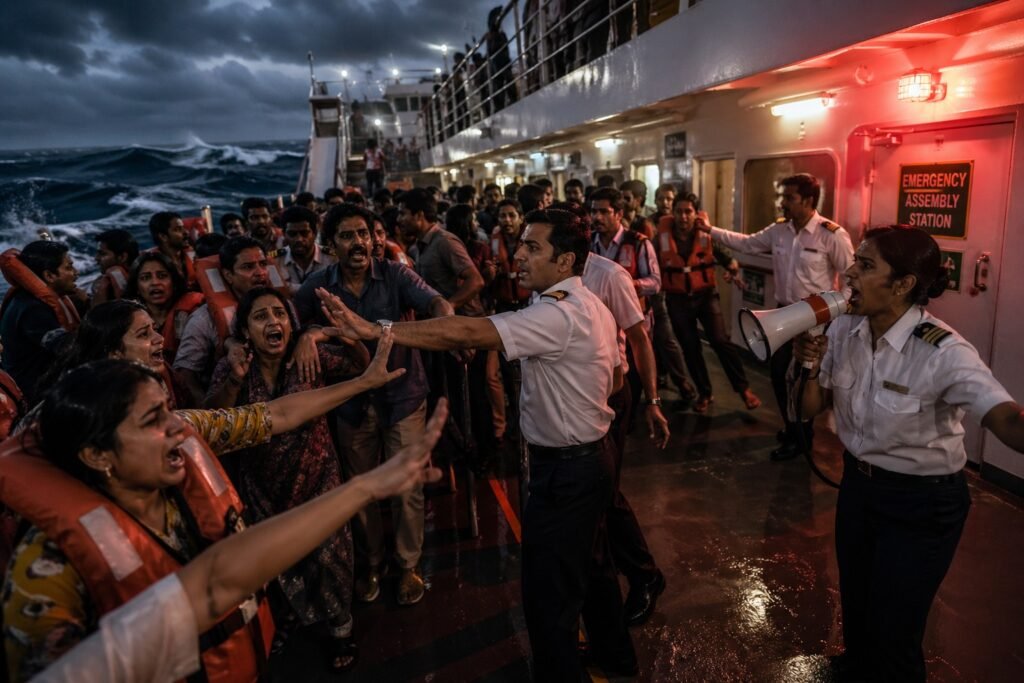
Panic is a strong reaction that causes flight, immobility (freezing), or disorganization. It comes from intense fear.
Basic Human Instinct During Fear
When a person feels fear, the body prepares itself by:
- Getting ready to fight
- Getting ready to run
- Putting the brain on high alert
- Releasing an adrenaline rush that gives extra muscle power
Basic Reaction Patterns in a Crowd
During an emergency, people usually react in these ways:
- Active (10% to 30%): People who are willing to do something and take action.
- Passive (50% to 75%): People who only wait and do nothing.
- Panic (1% to 3%): People who become completely overwhelmed with fear.
Crowd Management Training
According to STCW’95 (as amended) Regulation V/3, paragraph 4, crew members who are designated in the muster list to assist passengers during emergencies must receive special crowd management training. This training includes important skills needed to handle passengers safely in emergency situations.
Here is a much longer, detailed, and beginner-friendly rewritten version of the new content you sent.
Awareness of Life Saving Appliances and Emergency Procedures on Passenger Ships
Life saving appliances such as lifeboats and liferafts are essential for safety on passenger ships. Every ship must carry enough survival craft for all persons on board. Crew members must know the muster list, emergency instructions, escape routes, and how to assist passengers calmly during emergencies. Proper training, clear communication, and crowd control help prevent panic and ensure safe evacuation.