
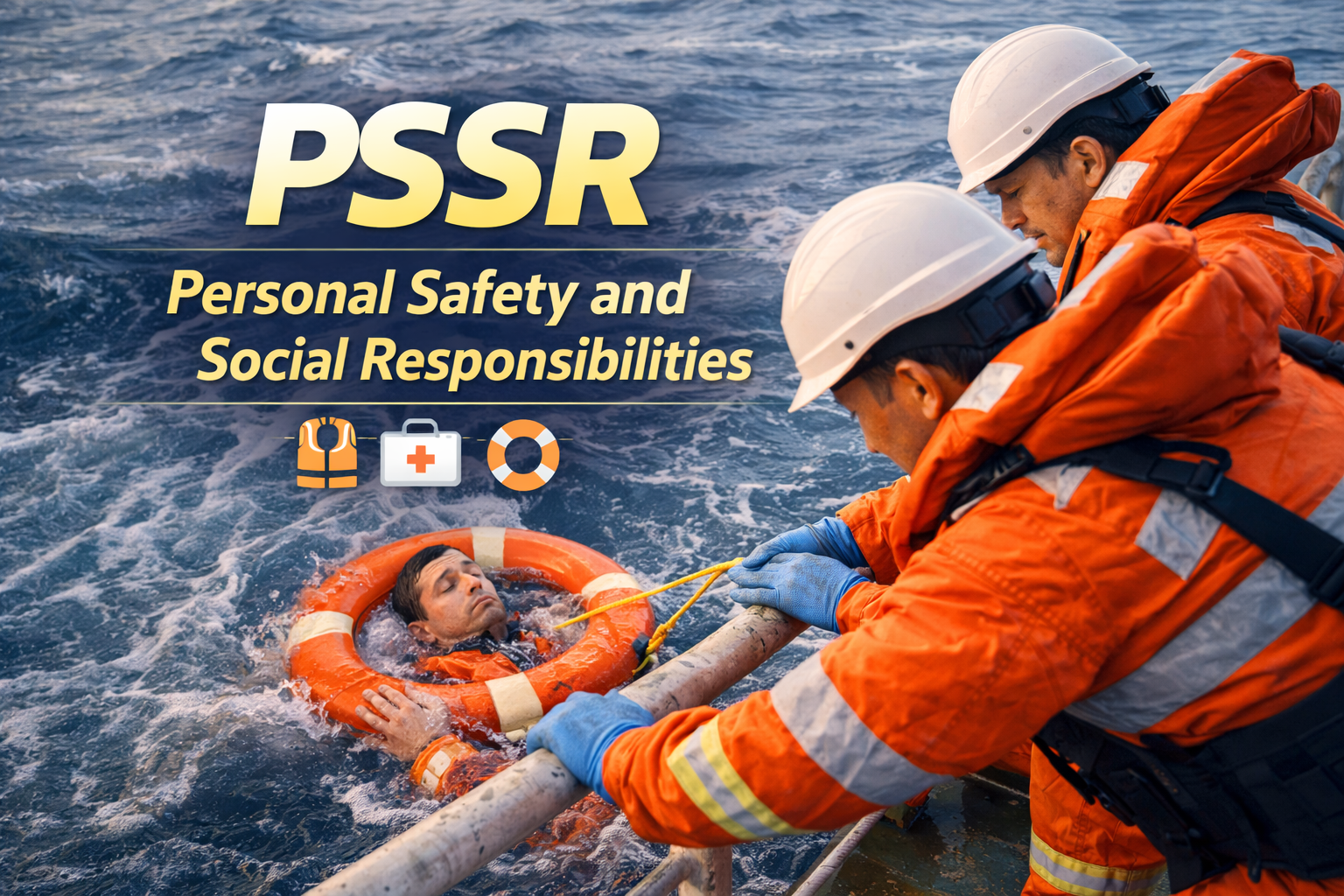
The Personal Safety and Social Responsibilities (PSSR) course provides basic knowledge on safety procedures, accident prevention, and social responsibilities onboard ships. This course is designed as per STCW requirements.
Course Content
Course Overview and Objectives
This topic introduces the objectives and scope of the PSSR course and explains its importance for seafarers.
This topic focuses on the importance of safe working practices onboard ships. It explains how seafarers can identify hazards, follow safety procedures, and adopt correct work methods to prevent accidents and injuries while working at sea.
This topic focuses on the practical application of safety procedures during shipboard operations and the importance of following established rules to maintain a safe working environment.
This topic explains the basic structure of a ship, important work areas onboard, and commonly used shipboard terms to help seafarers understand their working environment.
This topic introduces the various types of ships used in the maritime industry and explains the nature of cargoes they carry, along with a basic understanding of cargo handling operations onboard.
This topic explains the features of general cargo ships, the types of cargo they carry, and the basic operational practices followed during cargo handling onboard.
This topic explains the design and operational features of multi-functional cargo ships, their ability to carry different types of cargo, and the basic cargo handling practices followed onboard.
This topic explains the design, characteristics, and development of bulk carrier ships, along with the nature of solid bulk cargo transported by these vessels.
This topic explains the concept and design of Roll-on Roll-off (Ro-Ro) ships, the types of wheeled and tracked cargo they carry, and the cargo handling arrangements such as ramps and deck configurations used onboard.
This topic explains the different types of oil tankers, their classification based on cargo and size, special tanker operations, and the structural features designed to ensure safety during the transportation of liquid cargo.
Combination carriers are specially designed merchant ships capable of transporting different types of cargo such as ore, dry bulk, and oil at different stages of their voyage. These ships provide operational flexibility by allowing ship operators to avoid empty return voyages and improve overall efficiency.