Multi-Functional Cargo Ships
Multi-functional cargo ships are designed to perform a wide range of transport roles. As the name suggests, these vessels are built to carry different types of cargo, making them highly versatile and adaptable. They are commonly used in infrastructure-related projects, where cargo requirements vary widely. These ships can handle roll-on/roll-off cargo, containers, liquid bulk, and dry bulk parcels. The ability to transport multiple cargo types on a single vessel allows operators to maximize operational flexibility and revenue potential.
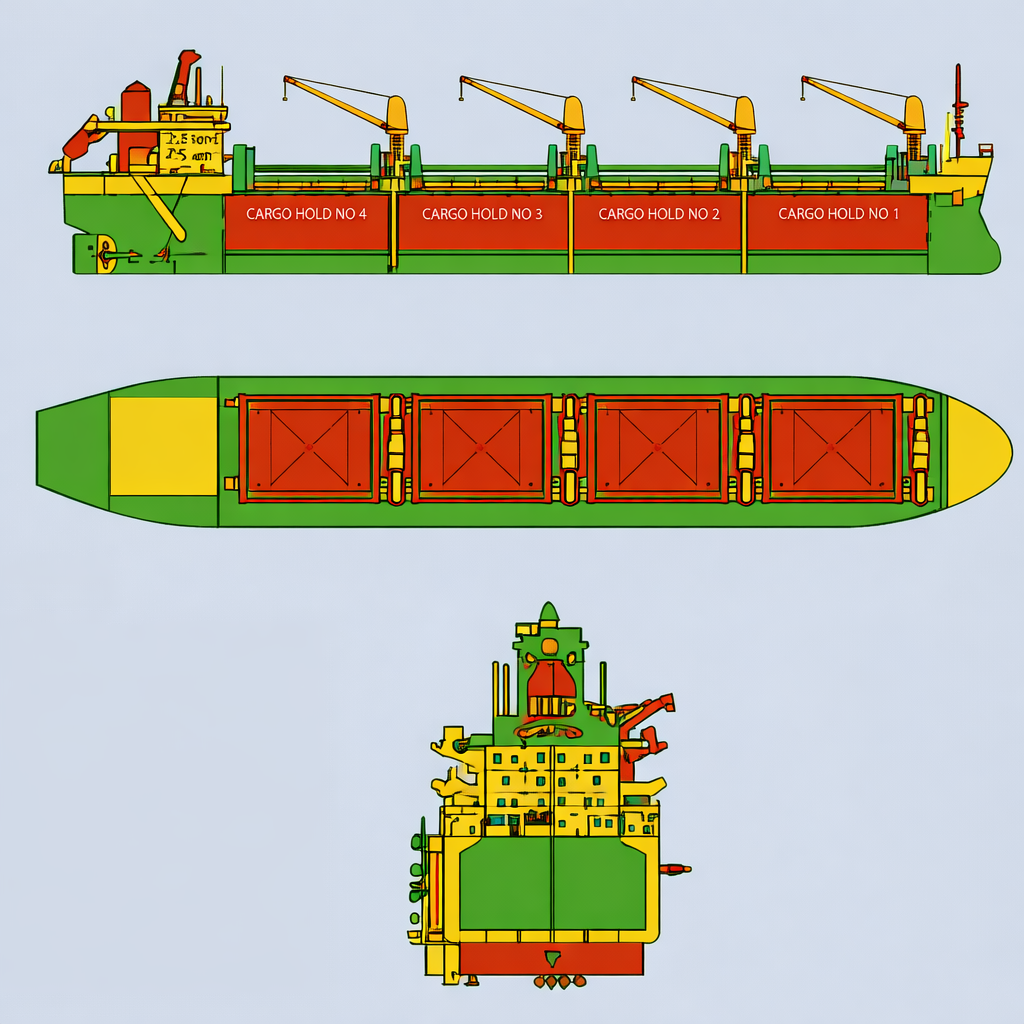
To meet these diverse demands, multi-functional cargo ships are equipped with their own heavy-lift cargo handling gear and are designed with practical cargo spaces below deck. This enables them to carry liquid bulk, dry bulk, or Ro-Ro cargo efficiently. The ships are fitted with wide and elongated hatch openings, often leading to a tween deck and a lower hold with a strengthened flat bottom, commonly referred to as the tank top. In addition, these vessels are capable of carrying a limited number of containers on deck.
One of the most important features of multi-functional cargo ships is their independent cargo-handling capability. The onboard lifting equipment allows loading and unloading operations even in ports where shore-based cranes are unavailable. This makes such ships especially suitable for calling at smaller or under-developed ports.
To ensure cargo safety during transit, these ships are fitted with cargo securing arrangements such as pad eyes and D-rings. These lashing points are provided on deck as well as inside cargo holds and tween decks, preventing cargo movement during the voyage.
Multi-functional cargo ships are generally capable of maintaining relatively high service speeds of around 18–19 knots. Their moderate draft and air draft allow them to access minor ports where high-value cargo may need to be loaded or discharged. In terms of size, these vessels typically range from about 6,000 deadweight tonnes to around 30,000 deadweight tonnes. Smaller vessels are often employed exclusively in project cargo trades, while larger vessels usually rely on additional breakbulk cargo, such as forest products, to remain commercially viable.
Types of Multi-Functional Cargo Ships
Not all multi-functional cargo ships are identical. There are several vessel types within this category, including heavy-lift carriers, tweendeck vessels, and combination Ro-Ro/container ships.
Heavy-Lift Carriers – Key Characteristics
Heavy-lift carriers are equipped with large cranes mounted on pedestals, typically located on the port side of the deck. This crane arrangement provides extended outreach, allowing cargo to be handled over a wider dock area. In addition to the main heavy-lift cranes, secondary cargo cranes are installed along the ship’s centerline, both forward and aft. These secondary cranes serve smaller hatches where lighter breakbulk cargo is loaded and stowed.
Tweendeck Vessels – Key Characteristics
Tweendeck vessels are designed to offer increased flexibility in cargo stowage. The presence of a tween deck raises the cargo’s center of gravity, contributing to improved stability during sea passage. Some tweendeck ships are fitted with side doors, enabling weather-protected cargo handling for sensitive goods such as paper rolls. Although these vessels can carry containers, they are primarily designed to accommodate a wide variety of non-containerized cargo.
These ships feature large cargo holds with wide hatch openings. The flexibility of tweendeck vessels comes from the adjustable height and removable design of the tween decks. The tweendeck covers can be secured at different levels or used as portable bulkheads for grain cargo.
Combination Ro-Ro / Container Ships – Key Characteristics
Certain multi-functional ships are designed as combination Ro-Ro and container vessels. These ships carry containers on deck, while Ro-Ro cargo is handled below deck. Unlike heavy-lift ships, below-deck cargo is loaded through a stern ramp rather than via cargo holds. This configuration allows the vessel to transport a wide range of project and breakbulk cargo. Any non-containerized cargo must be rolled onboard using the stern ramp, requiring a different cargo handling method.
All types of multi-functional cargo ships are fitted with specialized features suited to the specific trades in which they operate. However, they differ in unique design elements such as heavy-lift gear, mechanical side doors, and Ro-Ro ramps.
When ordering a new vessel, ship operators must carefully consider which features are to be installed onboard. These decisions directly influence whether the ship will remain a productive and profitable asset throughout its commercial service life.