Course Content
Course Overview and Objectives
This topic introduces the objectives and scope of the PSSR course and explains its importance for seafarers.
0/1
Shipboard Safety and Work Practices
This topic focuses on the importance of safe working practices onboard ships. It explains how seafarers can identify hazards, follow safety procedures, and adopt correct work methods to prevent accidents and injuries while working at sea.
0/1
Applying Safety Procedures Onboard
This topic focuses on the practical application of safety procedures during shipboard operations and the importance of following established rules to maintain a safe working environment.
0/1
Understanding Ship Structure and Work Areas
This topic explains the basic structure of a ship, important work areas onboard, and commonly used shipboard terms to help seafarers understand their working environment.
0/1
Different Ship Types and Cargo Handling Methods
This topic introduces the various types of ships used in the maritime industry and explains the nature of cargoes they carry, along with a basic understanding of cargo handling operations onboard.
0/1
General Cargo Vessels and Their Role
This topic explains the features of general cargo ships, the types of cargo they carry, and the basic operational practices followed during cargo handling onboard.
0/1
Multi-Functional Cargo Ships
This topic explains the design and operational features of multi-functional cargo ships, their ability to carry different types of cargo, and the basic cargo handling practices followed onboard.
0/1
Bulk Cargo Ships and Their Operations
This topic explains the design, characteristics, and development of bulk carrier ships, along with the nature of solid bulk cargo transported by these vessels.
0/1
Ro-Ro Ships
This topic explains the concept and design of Roll-on Roll-off (Ro-Ro) ships, the types of wheeled and tracked cargo they carry, and the cargo handling arrangements such as ramps and deck configurations used onboard.
0/1
Overview of Oil Tanker Vessels
This topic explains the different types of oil tankers, their classification based on cargo and size, special tanker operations, and the structural features designed to ensure safety during the transportation of liquid cargo.
0/1
Combination Carriers (Ore–Bulk–Oil Carriers)
Combination carriers are specially designed merchant ships capable of transporting different types of cargo such as ore, dry bulk, and oil at different stages of their voyage. These ships provide operational flexibility by allowing ship operators to avoid empty return voyages and improve overall efficiency.
0/1
Personal Safety and Social Responsibilities (PSSR)

Combination Carriers

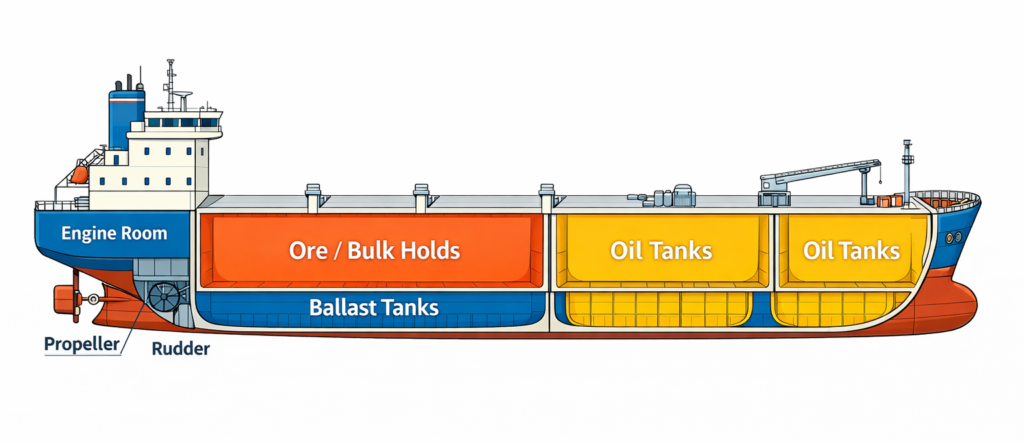
Combination carriers, commonly known as OBO (Ore–Bulk–Oil) carriers, are designed to carry more than one type of cargo, but not at the same time. A ship may carry crude oil on one voyage and dry bulk cargo like ore or coal on another voyage using the same cargo spaces.

The main purpose of a combination carrier is to reduce ballast voyages and increase earning potential. By carrying different cargoes on alternate legs of a journey, the ship remains commercially productive in both directions.

These vessels are constructed with cargo holds that can safely handle both liquid and solid cargoes. The internal structure is reinforced, and special coating systems are used to protect the ship when switching between oil and dry bulk cargoes.

Combination carriers require strict cleaning and inspection procedures when changing from oil cargo to dry bulk cargo or vice versa. This is necessary to avoid contamination and ensure safety.

Although combination carriers offer high flexibility, their complex design and maintenance requirements have reduced their popularity in recent years. Many operators now prefer specialized ships, but combination carriers are still important for certain trade routes where cargo availability varies.