Bulk Carriers
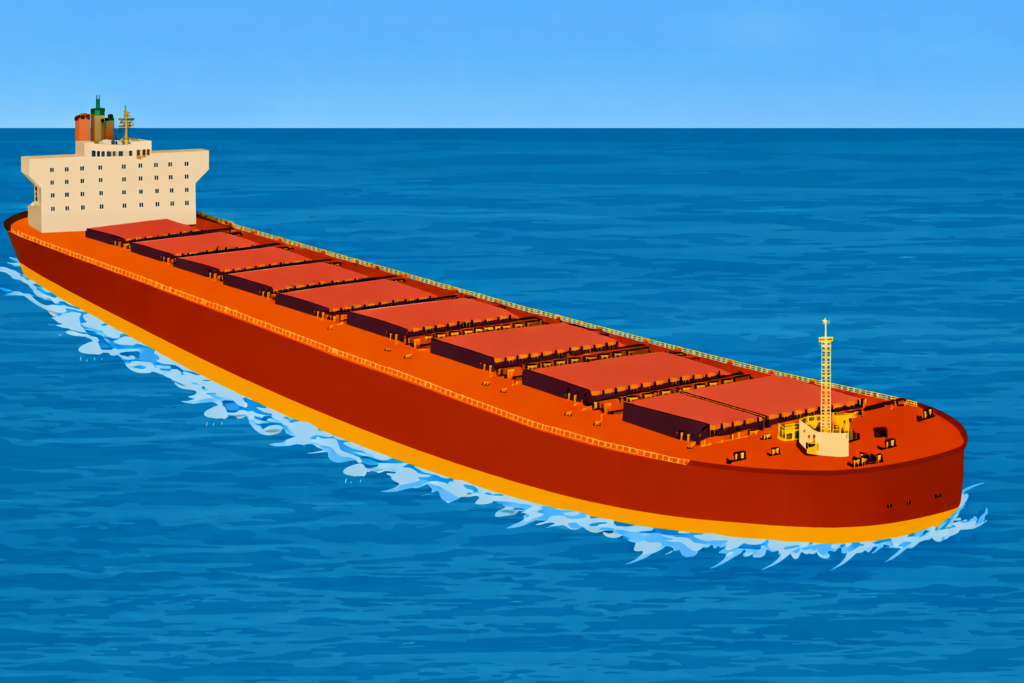
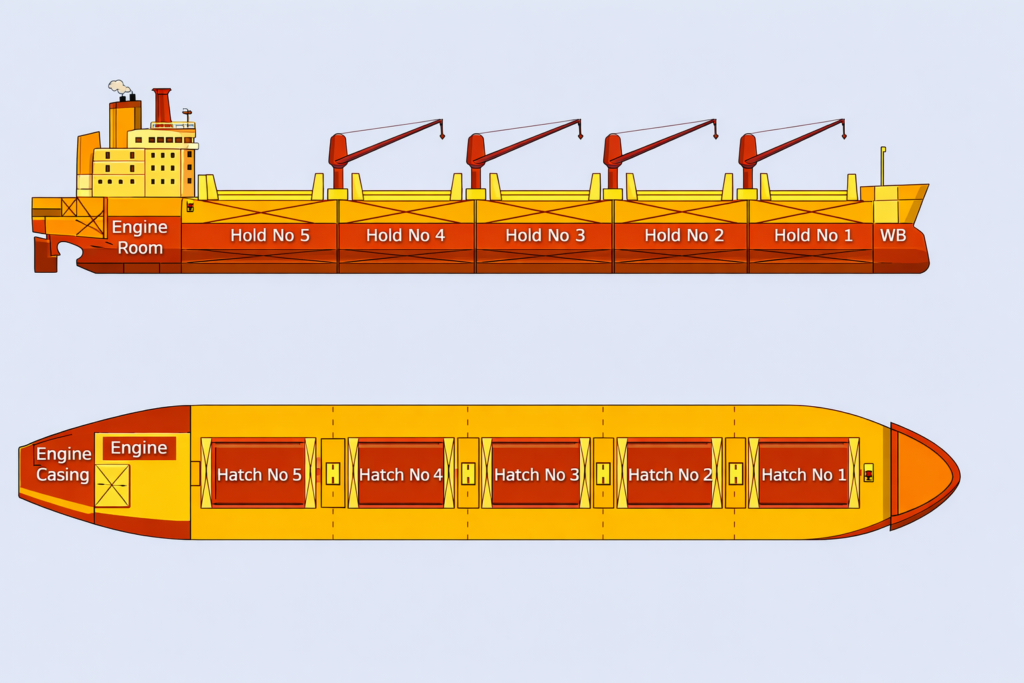
Bulk carriers are merchant vessels specifically constructed to transport unpackaged dry bulk cargo directly within their cargo holds. These cargoes include materials such as coal, grain, ore, cement, and similar commodities. The first purpose-built bulk carrier was introduced in 1852, and since then, economic and commercial demands have driven continuous advancements in the design of these ships. Modern bulk carriers are now engineered to achieve high cargo capacity while ensuring safety, operational efficiency, and structural strength.
At present, bulk carriers are available in a wide range of sizes. Smaller vessels may be around 100 metres in length, while the largest bulk carriers can transport cargoes of up to approximately 350,000 tonnes. Contemporary bulk carriers are typically single-screw vessels with a high block coefficient. Their hull form is designed to reduce water resistance, thereby improving propulsion efficiency. In addition, the vessel’s shape ensures adequate water flow towards the propeller and rudder, which is essential for effective maneuvering and performance.
Solid bulk cargo refers to goods that consist of solid particles or granular materials, which may be dry or contain moisture. Such cargoes are generally uniform in composition and are loaded directly into the ship’s cargo holds without the use of bags or packaging. Common examples of solid bulk cargo include coal, sulphur, mineral ores, fertilisers, and grain. These cargoes require careful handling and stowage to ensure safety during loading, transport, and discharge.