General Cargo Vessels and Their Role
General cargo ships are among the earliest types of cargo vessels used in maritime transport. These ships are designed to carry different kinds of cargo at the same time, usually in smaller quantities. Cargo carried on such vessels is typically handled as individual units or in unitized and palletized forms. Items such as boxes, barrels, bales, crates, packages, and bundles are collectively referred to as general cargo. This type of cargo is usually stowed in non-specialized cargo spaces within the ship.
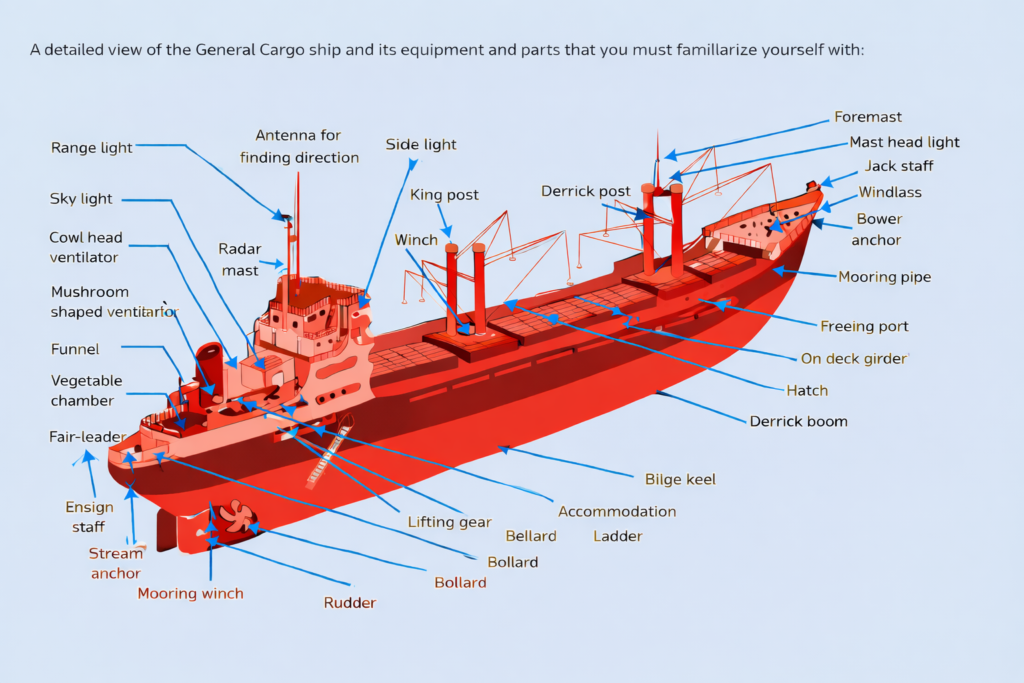
General cargo ships are equipped with their own cargo handling arrangements, allowing them to load and discharge cargo without heavy dependence on shore-based equipment. Decks of these vessels commonly feature various combinations of derricks, cranes, and lifting gear, which support flexible cargo operations in different ports and working conditions.
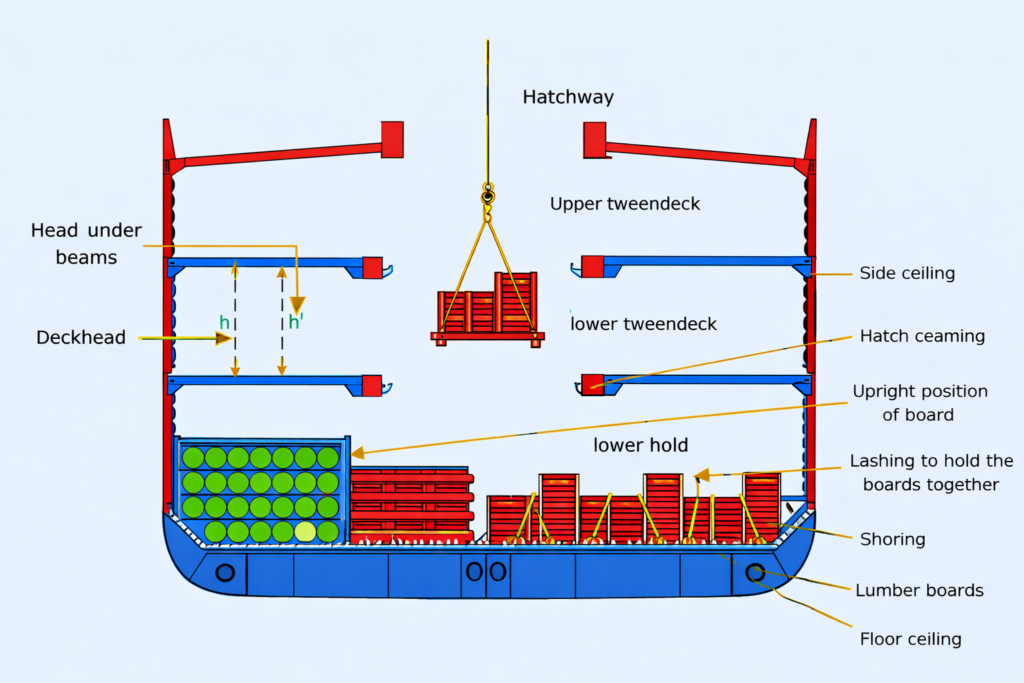
Pallets play an important role in the handling of general cargo. A pallet is a flat wooden platform supported by bearers, designed to carry goods as a single unit. Once cargo is placed on a pallet, it can be moved easily using mechanical equipment such as forklifts. Pallets are manufactured in standard sizes, with dimensions of 40 inches by 48 inches (approximately 100 cm by 122 cm) being the most widely used.
The use of pallets reduces the need for manual handling and helps save labor during cargo operations. However, palletization also has certain limitations. It does not fully prevent damage caused by crushing, increases the stowage factor due to loss of available space, and may result in a reduction of ship stability if not properly managed.
General arrangement of a cargo ship
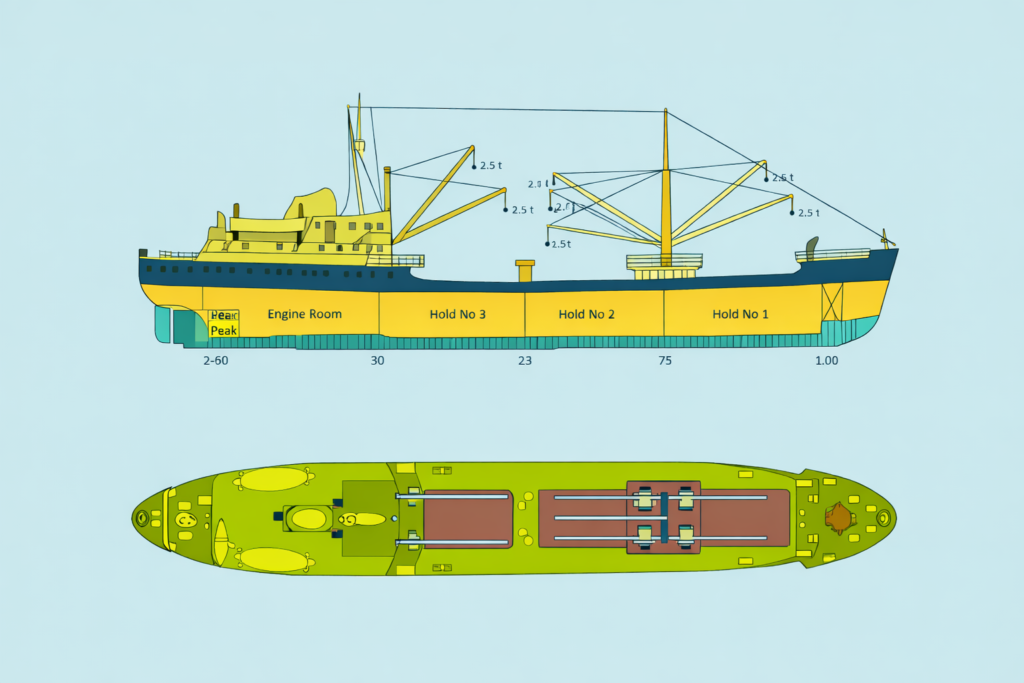
A clear diagram of a general cargo ship showing its main parts and equipment that seafarers should understand.