
Oil Tankers
Oil tankers are specially designed vessels used to transport a wide range of liquid cargoes by sea. Broadly, oil tankers can be classified into two main categories. The first category includes crude oil tankers, which are primarily used to carry a single grade of crude oil. Some of these vessels, known as Ultra Large Crude Carriers (ULCCs), can reach deadweight capacities of up to 500,000 tonnes.
The second category consists of product tankers. These vessels are designed to transport multiple grades of refined petroleum products simultaneously. Product carriers are generally smaller in size compared to crude oil tankers and are commonly employed for shorter trade routes and regional distribution.
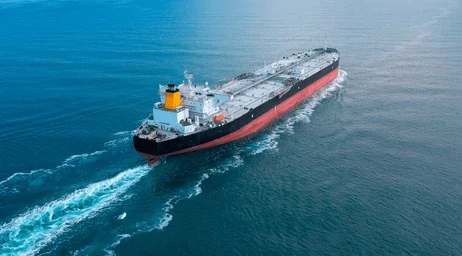
Oil Tanker
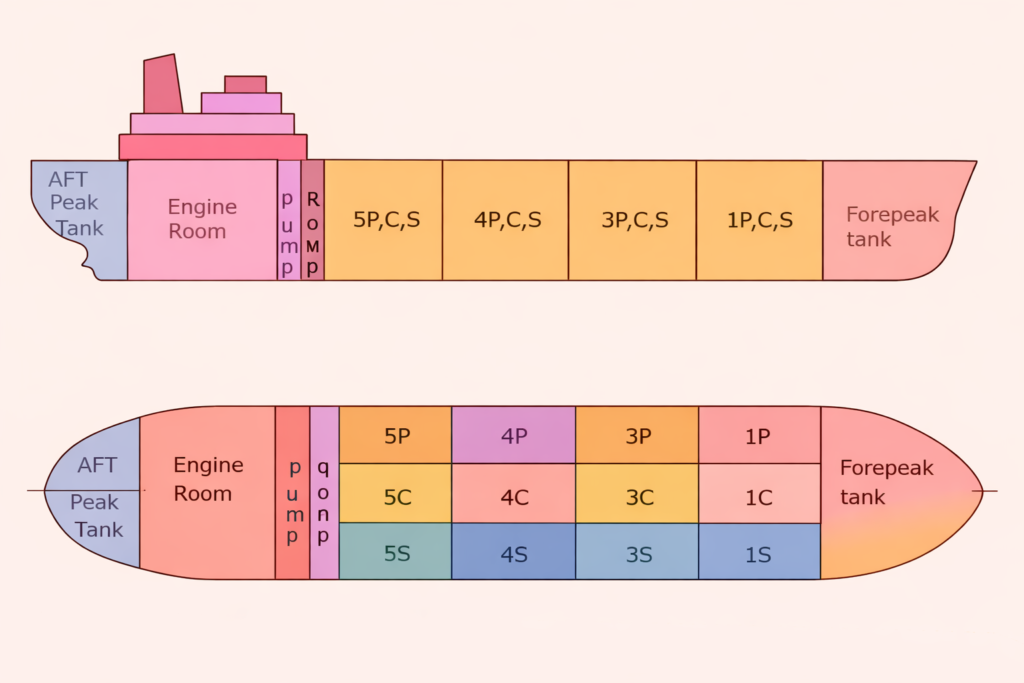
Top View Layout of an Oil Tanker
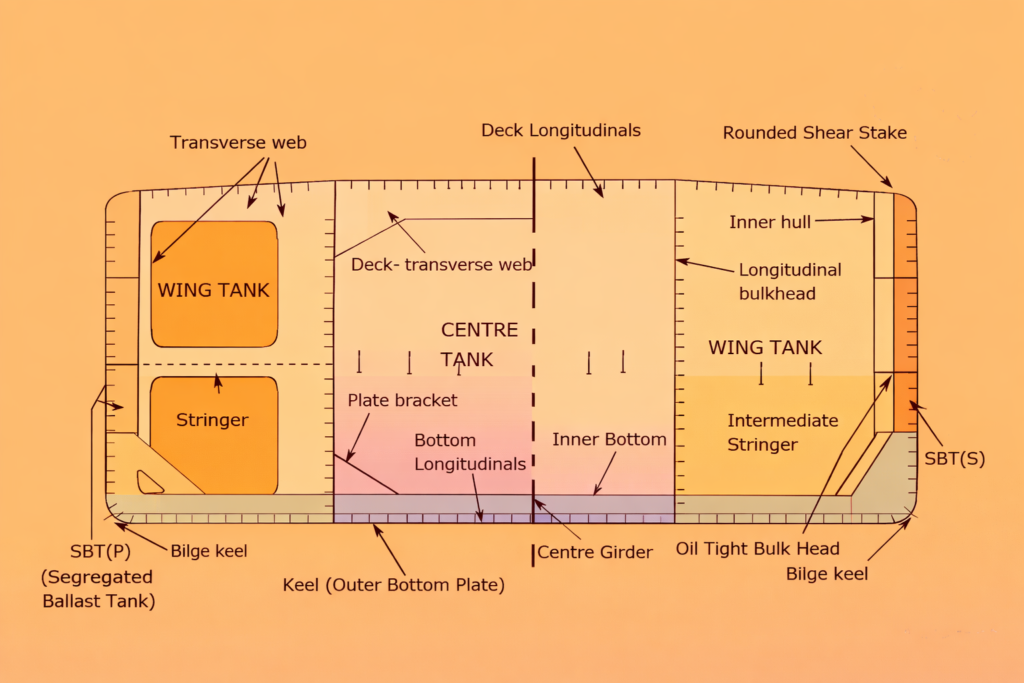
Midship Section of a Double Hull Tanker
In addition to being classified as crude oil tankers or product tankers, oil tankers may be further sub-categorized based on their operational roles. While most tankers transport oil between ports, replenishment oilers are designed to refuel ships while they are at sea. Mother ships operate in deep waters and transport large quantities of oil from offshore oil fields to deep-water areas near ports. Lightering vessels then transfer the oil from these mother ships to shore-based refineries.
In some cases, tankers that are no longer economically viable for regular voyages are used as floating storage units. These vessels remain anchored and serve as temporary storage for oil cargo.
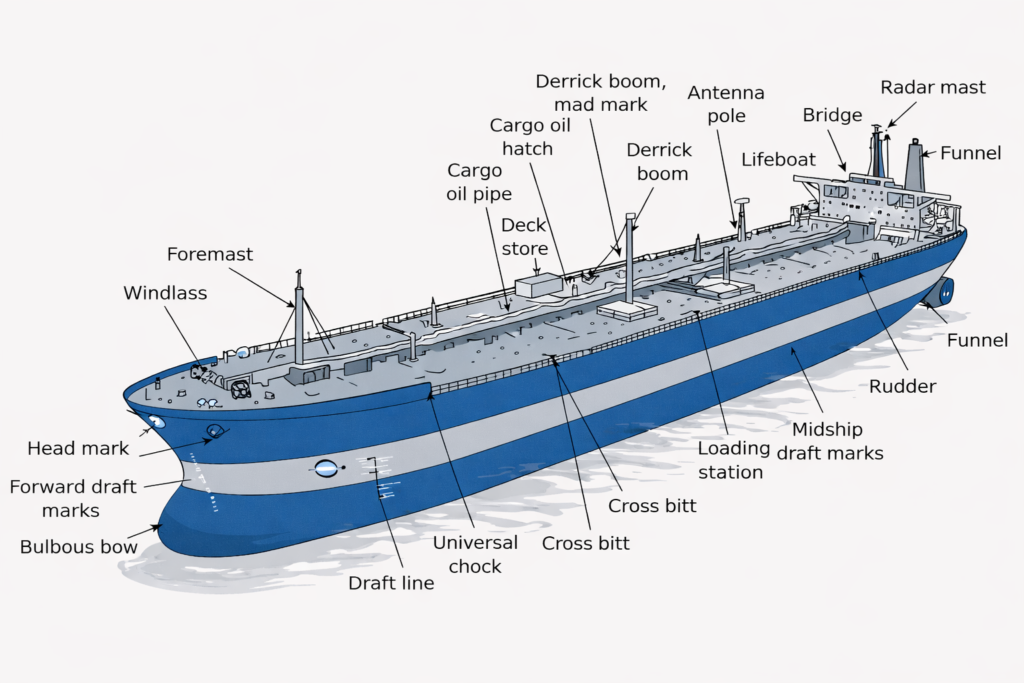
Common Terminology Used for Oil Tanker Classification
Certain terms are specifically used to describe oil tankers based on their construction and capacity.
Single Hull
Single-hull tankers have only one layer of hull plating separating the seawater from the oil cargo. These vessels are no longer built, and most existing single-hull tankers are being phased out or banned in many countries due to environmental safety concerns.
Double Hull
Double-hull tankers are constructed with two layers of hull plating, creating a protective space between the sea and the cargo tanks. This design is mandatory for newly built oil tankers and provides additional protection against oil spills in the event of a collision or grounding.
OBO (Ore-Bulk-Oil Carrier)
OBO carriers are designed to transport oil on one leg of a voyage and bulk cargo, such as iron ore, on the return leg. This dual-purpose design allows operators to maximize revenue by avoiding empty return voyages.
LR1 (Large Range 1)
LR1 tankers have a deadweight tonnage ranging between 45,000 and 80,000 tonnes.
LR2 (Large Range 2)
LR2 tankers fall within a deadweight range of 80,000 to 159,999 tonnes.
VLCC (Very Large Crude Carrier)
VLCCs carry between 160,000 and 319,999 tonnes of crude oil. Vessels of this size and above are commonly referred to as supertankers.
ULCC (Ultra Large Crude Carrier)
ULCCs are the largest oil tankers in operation, with deadweight capacities of 320,000 tonnes and above. These massive vessels are among the largest ships ever built and are comparable in length to some of the tallest structures in the world.