
Types of Oil Tankers The trainees should have a general knowledge about the important stages in the development of tankers and oil shipping. This is a brief overview of the manner in which tankers carrying oil, petroleum and its products have developed over the years. “Safe Oil Tanker Operations”, B3 will provide sufficient information in respect to dates, the carriage of oil in barrels in conventional cargo ships, their development into tank-type vessels to carry oil in bulk and subsequent development into the modern forms.
The important stages in the development of tankers and oil shipping are:
- carriage of oil in barrels in conventional cargo ships
- construction of vessels to carry oil in bulk
- use of longitudinal divisions and transverse bulkhead to form tanks
- location of machinery aft
- increase in size to VLCCs and ULCCs
- transportation of liquefied gas and chemicals in bulk
- pollution problems and explosion/fire hazard leading to international controls
- the development of SOLAS and MARPOL
- increasing use of training to improve safety and reduce pollution
- the STCW Convention and Chapter V of the Convention
- the development of double-hull tankers
- the implementation of the International Safety Management (ISM) code
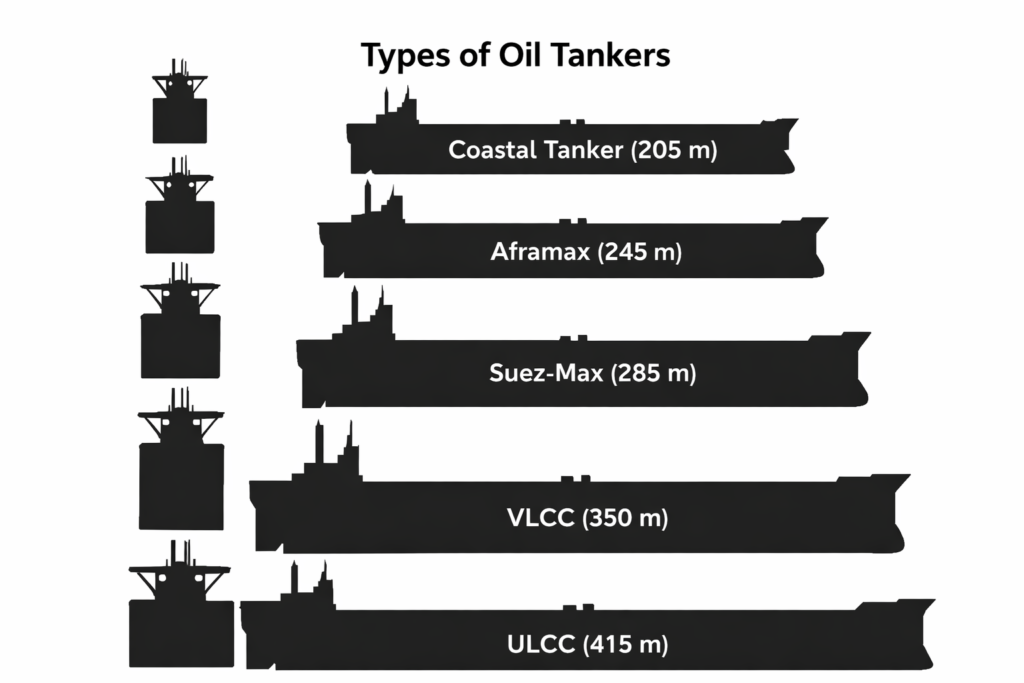
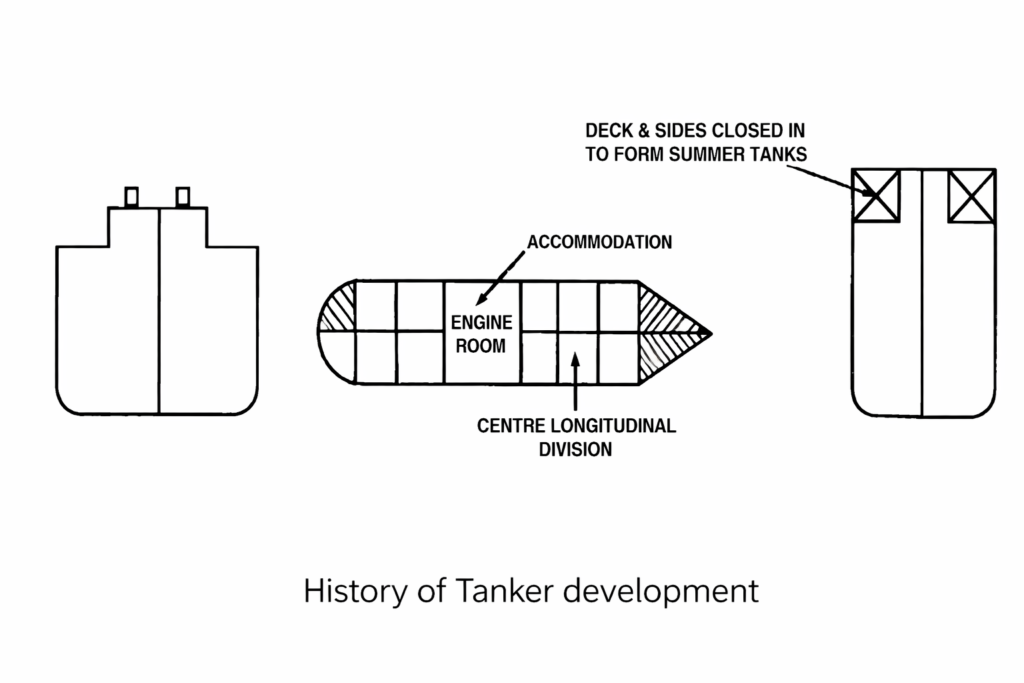
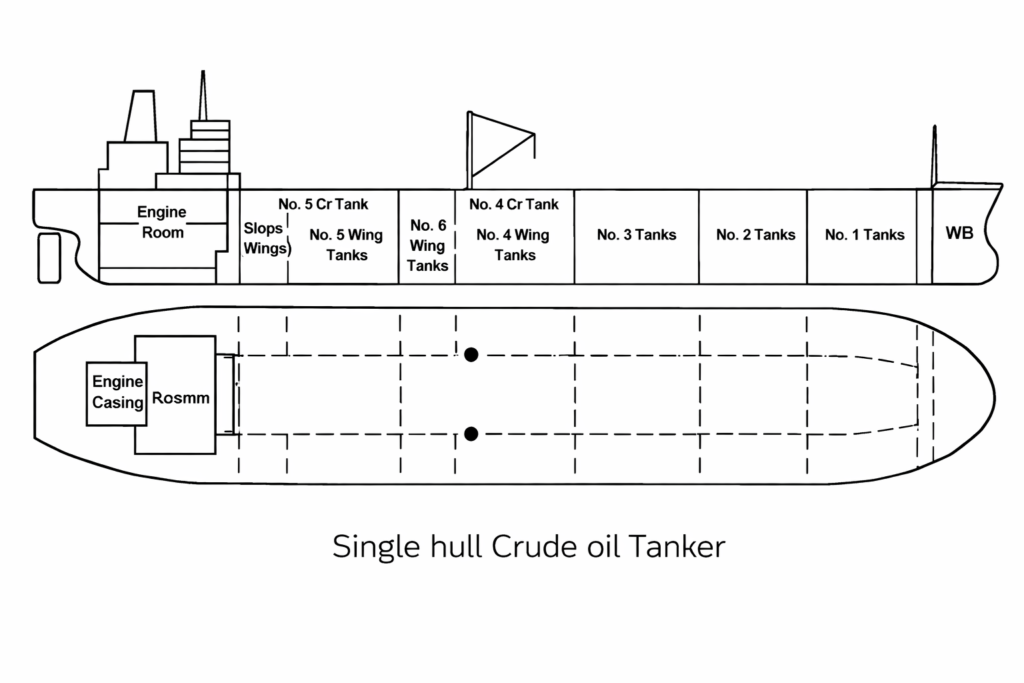
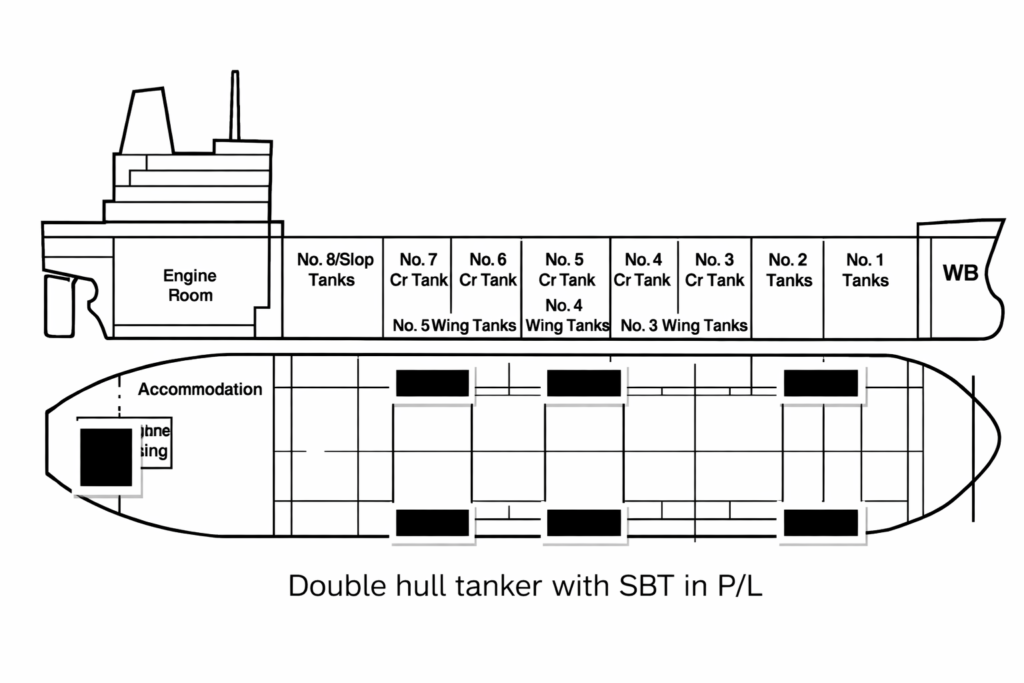
The trainees should be able to describe different types of Oil tankers such as Crude oil Carriers, Product Tankers, and Combination carriers.
Combination carriers include:
- Ships intended for separate carriage of oil and dry cargoes in bulk (notation: Bulk Carrier or Tanker for Oil)
- Ships intended for separate carriage of oil and ore in bulk (notation: Ore Carrier or Tanker for Oil)
- Combination of the two above, so-called OBO (Oil/Bulk/Ore carrier)
The trainees should appreciate that combination carriers are subject to demanding duties, which mean that they must be built, loaded and operated with keen attention.