
Cargo Information
- Information about cargoes is essential for vessel and crew safety.
- Found on ICS or other Cargo Data Sheets for each product, including data for safe handling and carriage.
- Cargo information kept on board and available to all concerned.
- Cargo not loaded unless sufficient information for safe handling/transportation available.
- Responsible officer posts necessary cargo information on notice board before operations.
- All personnel engaged in cargo operations familiarize themselves by studying ICS or other Cargo Data Sheets.
- Chemical tanker operations may involve simultaneous loading, unloading, and tank cleaning.
Loading
- All personnel follow standing instructions at all times (whether cargo dangerous or not).
- Personnel on watch/involved wear appropriate protective clothing per ICS or other Cargo Data Sheets for dangerous cargoes.
- Cargoes stowed per pre-prepared stowage plan.
- Prior to loading: Inspect cargo tanks for cleanliness and suitability per stowage plan.
- For cargoes with major fire hazard: Purge tanks with nitrogen to remove air (non-flammable atmosphere above cargo); maintain nitrogen “padding” during voyage.
- Cargo routing from manifold to tanks:
- On chemical tanker with pump-room.
- On chemical tanker with separate lines for each tank.
- Cargo vapour removal during loading.
- “Closed-circuit” loading operation.
- For cargoes with major health hazard vapours: Load in “closed circuit” with vapour-return line.
- Check for impurities: Take cargo samples from lines and tanks during loading.
- Adjust vessel’s trim, list, and stability (if necessary) by filling/emptying ballast tanks during loading.
- Record all events during cargo operations.
Unloading
- All personnel follow standing instructions at all times during unloading (whether cargo dangerous or not).
- Personnel on watch/involved wear appropriate protective clothing per ICS or other Cargo Data Sheets for dangerous cargoes.
- Unload cargoes per planned sequence of emptying tanks.
- Prior to unloading: Analyze cargo samples from each tank and cargo lines to check for on-board contamination during passage.
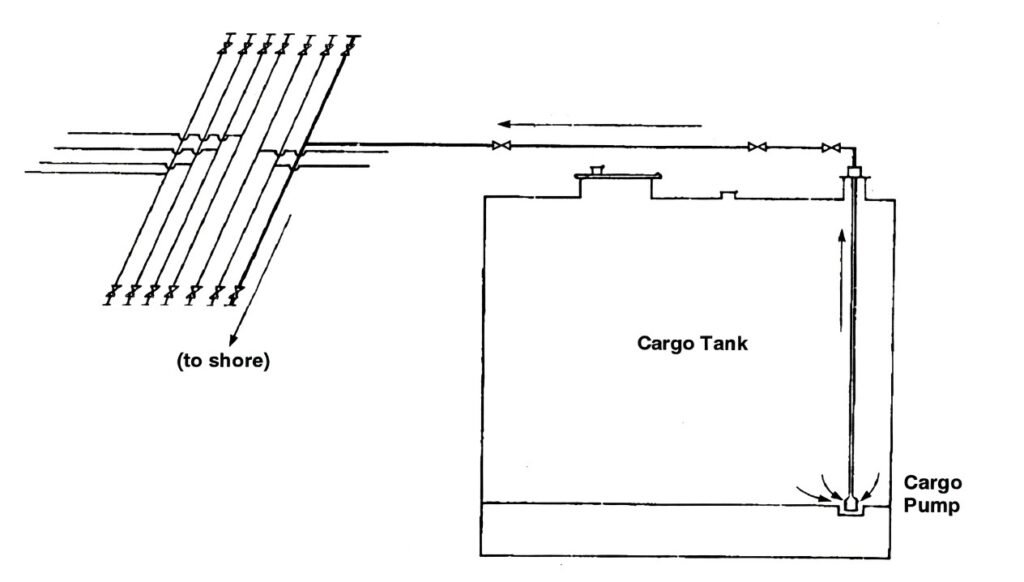
Pumps and Unloading Systems of a Chemical Tanker Types of Pumps Used:
- Centrifugal pumps
- Screw pumps
- Piston pumps (reciprocating pumps)
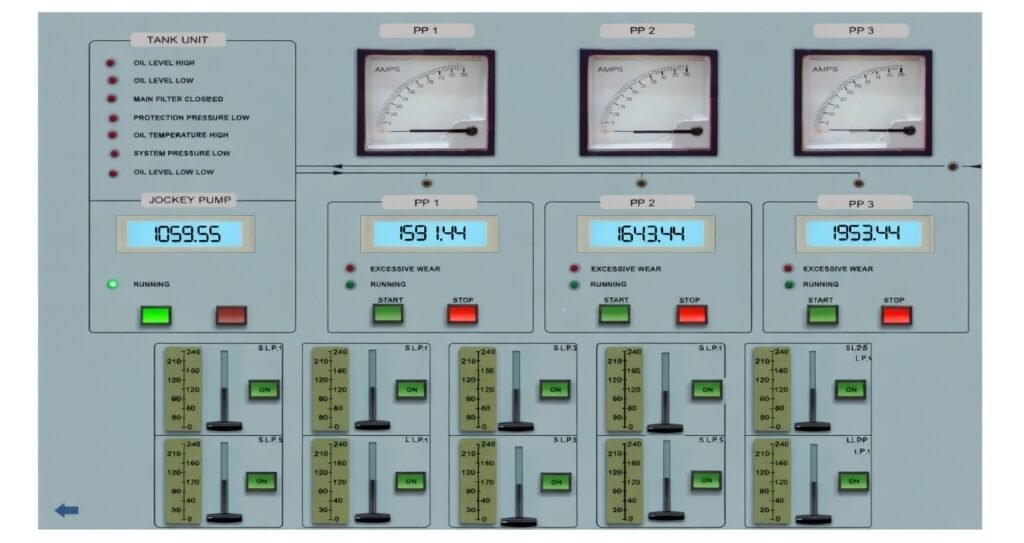
Main Cargo Pumps:
- Mainly centrifugal type.
- Either submerged pumps integral with hydraulic motors or extended shaft with deck-mounted electric motors (deep well pumps).
Benefits of Centrifugal Pumps:
- Simple construction (no valves).
- Relatively small size (can operate at high speed).
- Continuous pumping (no pulsation).
Drawbacks of Centrifugal Pumps:
- Difficulty constructing for high differential pressure per stage.
- High efficiency only within limited field.
- Normally not self-priming.
- Back flow through pump when stopped.
- Difficulty pumping high-viscosity liquids.
Pump Characteristics:
- Supplied with graph (performance curve) based on tests with specific liquid, temperature, density, impeller, and revolution rate.
- Includes: Q-H curve (total head vs. flow), power consumption, efficiency, NPSH.
- Design point: Best general result for efficiency, NPSH, power, flow.
- Total head independent of liquid density; differential pressure and power consumption vary proportionally with density.
- Curves for specific liquid; remember when evaluating.
Demonstration (use simulator drawings from Appendix 1 section 2):
- Cargo routing from tank to manifold on chemical tanker with pump-room.
- Cargo routing from tank to manifold on chemical tanker with deep well pumps and separate lines for each tank.
- Functioning of cargo-tank venting system during unloading.
Additional Unloading Notes:
- In tanks with major fire hazard cargoes: Use inert gas or nitrogen to maintain positive tank pressure during unloading (avoid air entry).
- Adjust vessel’s trim, list, and stability (if necessary) by filling/emptying ballast tanks during unloading.
Tank Cleaning and Gas-Freeing
Reasons for Tank Cleaning:
- Prevention of contamination of the cargo to be loaded.
- Prevention of contaminated ballast.
- Maintenance of cargo tanks and equipment.
Tank-Washing Machines:
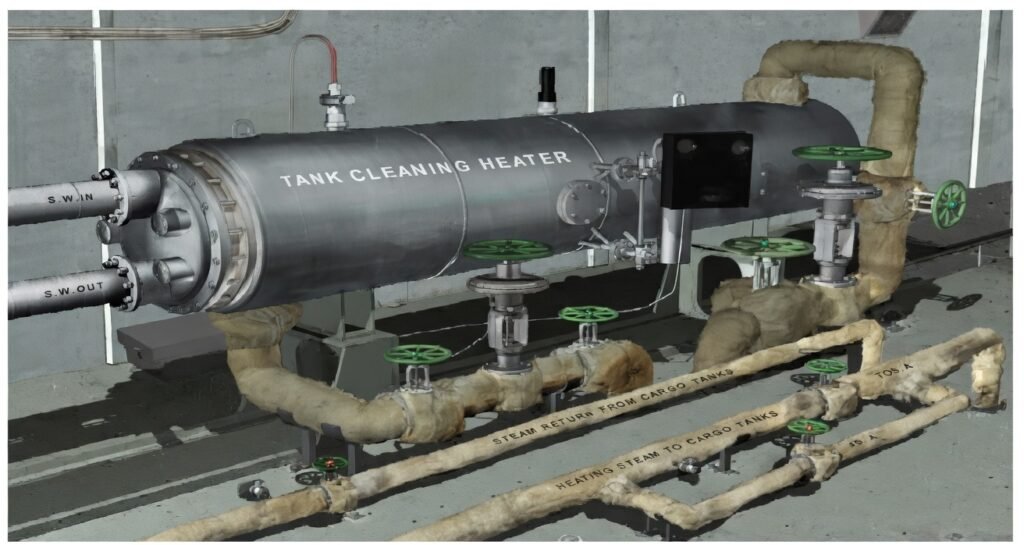
- Used for tank cleaning.
- May be fixed or portable.
- Tank-cleaning equipment must be properly earthed to avoid accumulation of static electricity.
Personnel Safety:
- Personnel involved in tank-cleaning operations may be exposed to cargo vapours.
- Use equipment for personal protection if necessary.
Tank-Cleaning Procedures:
- Different cargoes require different procedures.
- Cleaning may be done with:
- Hot or cold seawater
- Fresh water
- Ventilation only
- Water cannot be used for tank cleaning before or after some cargoes.
- In some cases, detergents are added to the washing water.
- In some cases, solvents are used for tank cleaning.
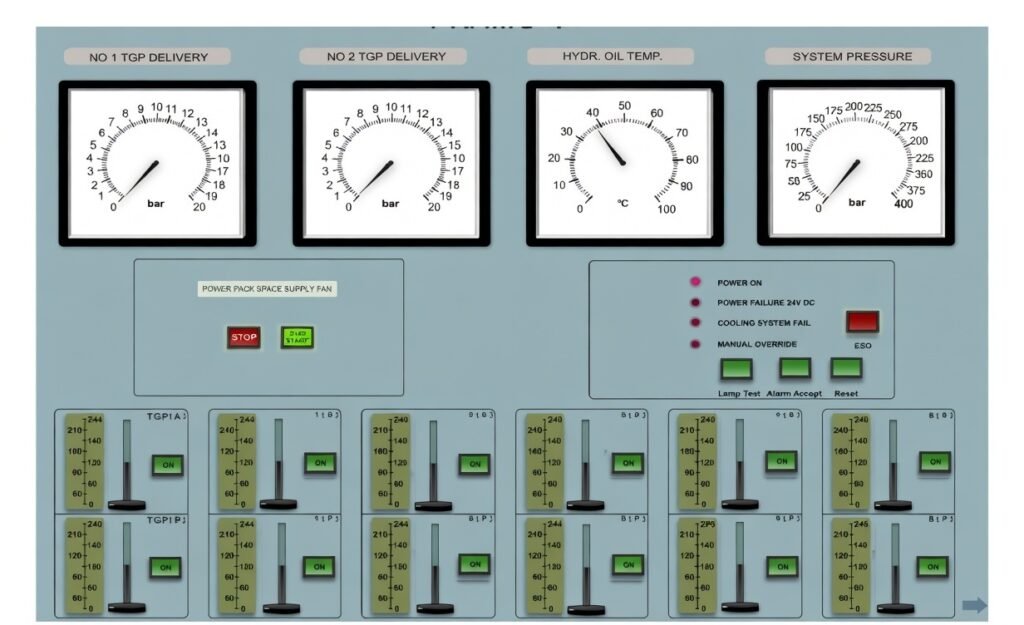
Use Diagrams:
- Use the diagram in Appendix 1 Section 2 of this course to explain:
- The working of a tank-washing machine.
- How the electric bonding of tank-cleaning hoses may be checked.
- A safe procedure for the connection and disconnection of tank-cleaning equipment.
Tank Cleaning Sequence:
- Pre-wash
- Main wash
- Fresh water rinse
Gas-Freeing:
- Purpose: Replace cargo vapours, inert gas, or any other gases with air.
- May be done by fixed or portable fans driven by air, steam, water, or hydraulic fluid.
- Operation verified by regular checks of the tank atmosphere.
- Tank atmosphere checked by measuring:
- Percentage of oxygen
- PPM values of cargo vapours or toxic constituents of inert gas
- A cargo tank is gas-free only when:
- Oxygen content is 21% by volume
- No vapours from cargo or toxic constituents of inert gas measured above the Threshold Limit Value (TLV)
Slops and Slops Disposal:
- Modern chemical tankers fitted with tanks for storage of slops.
- Cargo tanks may also contain slops.
- Discharge of slops into the sea prohibited unless certain conditions satisfied.
- Slops from certain noxious chemicals discharged to shore facilities.
- All slop-handling operations recorded in the Cargo Record Book.