
Inerting, Water Padding, Drying Agents and Monitoring Techniques Reference is made in part C which is adequate.
Anti-Static Measures (More information will be available from references B2, B4, ISGOTT, ICS Chemical safety guide)
The most important counter measure that must be taken to prevent an electrostatic hazard is to bond all metal objects together. Bonding eliminates the risk of discharges between metal objects, which can be very energetic and dangerous. To avoid discharges from conductors to earth, it is normal practice to include bonding to earth (earthing or grounding). On ships, bonding to earth is effectively accomplished by connecting metallic objects to the metal structure of the ship, which is naturally earthed through the sea.
Some examples of objects which might be electrically insulated in hazardous situations and which must therefore be bonded are:
- Ship/shore hose couplings and flanges if more than one length of non-conducting hose or pipe is used in a string.
- Portable tank cleaning machines.
- Conducting manual ullaging and sampling equipment.
- The float of a permanently fitted ullage device if it lacks an earthing path through the metal tape.
The most certain method of bonding and earthing is by means of a metallic connection between the conductors. This method should be used whenever possible, although for electrostatic purposes an adequate bond can in principle be made using a material of intermediate conductivity.
Certain objects may be insulated during tanker operations, for example:
- a metal object such as a can floating in a static accumulating liquid
- a loose metal object while it is falling in a tank during washing operations
Every effort should be made to ensure that such objects are removed from the tank, since there is evidently no possibility of deliberately bonding them. This necessitates careful inspection of tanks, particularly after shipyard repairs.
Explains Why Ventilation Systems Are Provided on Oil and Chemical Tankers The Ventilation exhaust ducts from gas-dangerous spaces should discharge upwards in locations at least 10 m in the horizontal direction from ventilation intakes and openings to accommodation, service and control station spaces and other gas-safe areas.
Ventilation intakes are so arranged as to minimize the possibility of recycling hazardous vapours from any ventilation discharge opening. The Ventilation ducts are not to be led through engine-rooms, accommodation, working spaces or other similar spaces. Ventilation fans should be approved by the Administration for operation in explosive atmospheres when flammable cargoes are carried aboard the ship.
The VOC Plan describes the specific arrangement, operations and conditions onboard a crude oil tanker with respect to the emission and ability to control VOC emissions. This VOC Plan is not a safety guide and reference should be made to other publications to evaluate safety hazards. The aim of the VOC Plan is to identify the arrangements and equipment required to enable compliance with MARPOL 73/78 regulation 15.6 of the revised Annex VI and to identify for the ship’s officers all operational procedures for VOC emission control.
Cargo Segregation Cargoes, residues of cargoes or mixtures containing cargoes, which react in a hazardous manner with other cargoes, residues or mixtures, shall be segregated from such other cargoes by means of a cofferdam, void space, cargo pumproom, pump-room, empty tank, or tank containing a mutually compatible cargo; have separate pumping and piping systems which shall not pass through other cargo tanks containing such cargoes, unless encased in a tunnel; and have separate tank venting systems.
In some countries a cruciform joint may be accepted as a double barrier for the purpose of segregation as:
- between mutually reactive cargoes;
The relevant compatibility regulations of certain Administrations may be required to be observed.
If cargo piping or cargo ventilation systems are to be separated, this separation may be achieved by the use of design or operational methods. Operational methods shall not be used within a cargo tank and shall consist of one of the following types:
- removable spool-pieces
- Blank flanges at both ends of the pipeline.
Cargo Inhibition For the requirements of Cargo Inhibition of some cargoes, polymerization is the process of forming a polymer by combining large numbers of chemical units or monomers into long chains. Polymerization can be used to make some useful materials. However, uncontrolled polymerization can be extremely hazardous. Some polymerization processes can release considerable heat, can generate enough pressure to burst a cargo tank or can be explosive.
Some chemicals can polymerize on their own without warning. Others can polymerize upon contact with water, air or other common chemicals. Inhibitors are normally added to products to reduce or eliminate the possibility of uncontrolled polymerization. Most MSDS have a section called “Hazardous Polymerization” which indicates whether hazardous polymerization reactions can occur, an inhibited cargo certificate should be provided to the ship before a cargo is carried. The action to be taken in case of a polymerization situation occurring while the cargo is on board should be covered by the ship’s emergency contingency plan.
Importance of Cargo Compatibility Leakages through bulkheads occur at times in any tanker. Normally, however, such leakages are only minor seepages. They will not cause any violent reaction due to the great disproportion in mixture from dangerous proportions. The cargo tanks are to be gauged daily to ensure that there are no inter tank leakages. In case the ullage in any tank is found to be increasing, the cause is to be investigated. If it is due to a leakage, the space into which the cargo is going must be identified. The space must be checked for compatibility of the tank material with the cargo. Any other cargo tank where this cargo may be transferred has to be identified. The leaking tank must be transferred to such a tank.
It is necessary for the ship master before taking such a decision to consider all other options and in case it is not possible to transfer the cargo to compatible tanks, the cargo MSDS must be referred to and methods to reduce the potential of the cargo to cause damage to the vessel must be worked upon. The contaminated cargo must be transferred separately into another tank, if available. No cargo shall be pumped overboard except as mentioned in case to save life or ship and all options have been considered by the ship master only then jettisoning cargo can be considered.
Atmospheric Control The section is intended to provide the trainees with the best possible understanding of different safety aspects and of the necessity of safe working routines on board. It is important that the instructor when dealing with this topic states that considerations are to be made even for
- Accommodation and
- Precautions against fire
When dealing with tank atmospheric control if cargo venting is involved.
Gas Testing Oil tankers using an inert gas system should maintain their cargo tanks in a non-flammable condition at all times. Tanks should be kept in an inert condition at all times, except when it is necessary for them to be gas free for inspection or work, i.e. the oxygen content should be not more than 8% by volume and the atmosphere should be maintained at a positive pressure. The atmosphere within the tank should make the transition from the inert condition to the gas free condition without passing through the flammable condition. In practice, this means that before any tank is gas freed, it should be purged with inert gas until the hydrocarbon content of the tank atmosphere is below the critical dilution line.
When a ship is in a gas free condition before arrival at a loading port, the tanks must be inerted prior to loading. In order to maintain cargo tanks in a non-flammable condition the inert gas plant will be required to:
- Inert empty cargo tanks
- Be in operation during cargo discharge, deballasting, crude oil washing and tank cleaning
- Purge tanks prior to gas freeing
- Top-up the pressure in the cargo tanks when necessary during other stages of the voyage.
The Instructors must emphasize that the protection provided by an inert gas system depends on the proper operation and maintenance of the entire system.
Understanding of Information on Material Safety Data Sheet (MSDS) The instructors should explain the trainees that MSDS is a document containing important information about a hazardous chemical (which may be a hazardous substance and/or dangerous good) and must state:
- a hazardous substance’s product name
- the chemical and generic name of certain ingredients
- the chemical and physical properties of the hazardous substance
- health hazard information
- precautions for safe use and handling
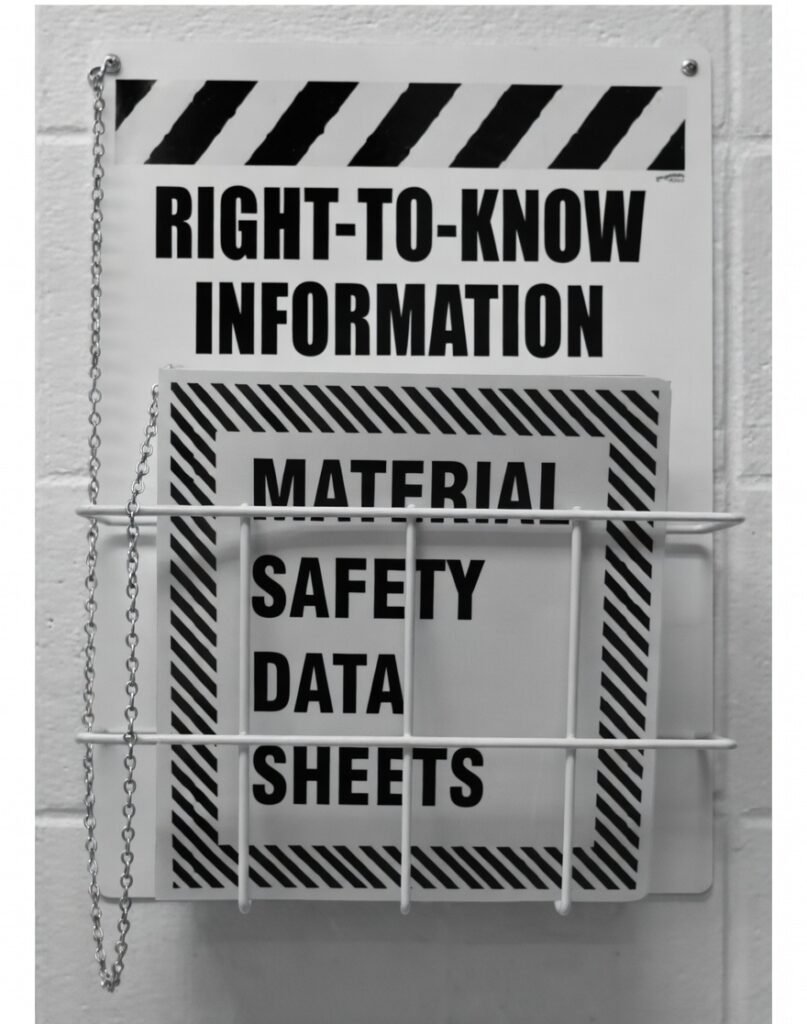
The MSDS provides us with the necessary information to assist in safely managing the risk from hazardous substance exposure. It is important that everyone in the workplace knows how to read and interpret a MSDS.