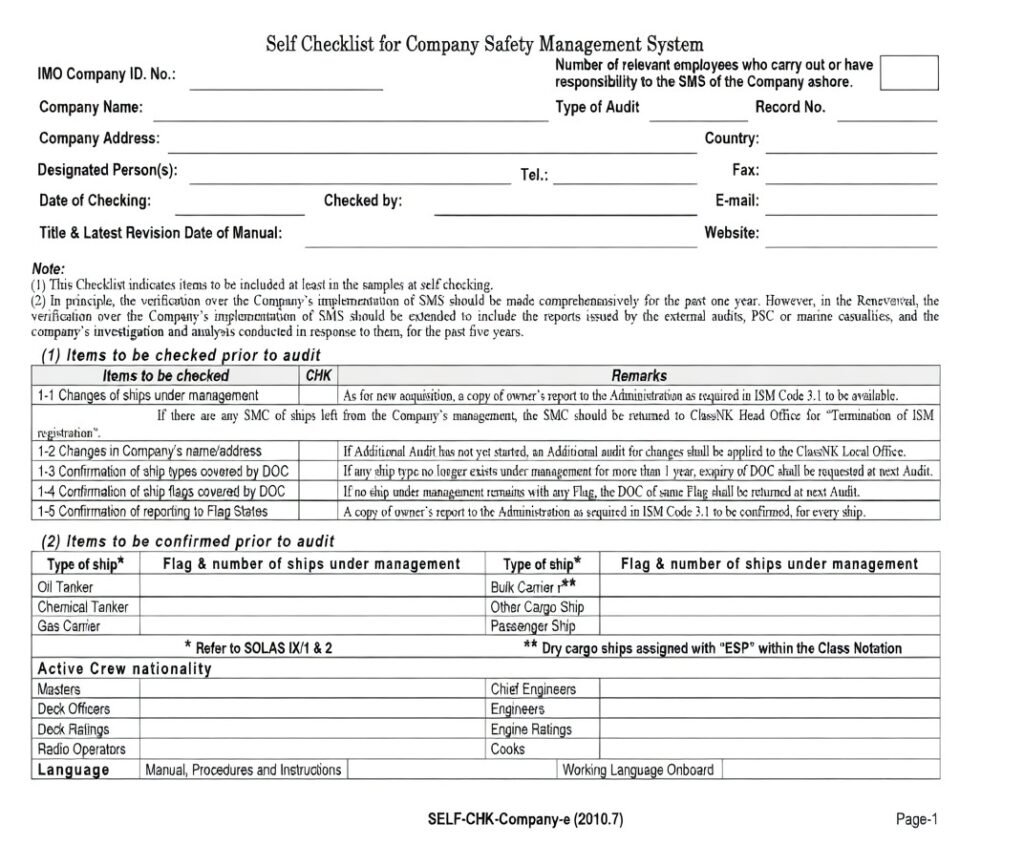
The Instructors can use the checklist of a company’s SMS (Safety management system)
The Oil Companies International Marine Forum (OCIMF) has been in the forefront of the drive to implement a common vessel inspection process through the introduction of the Ship Inspection Report Exchange (SIRE) system. This system promotes a uniformly high standard of common inspections. Member companies can then use the results within their own vetting systems.
The management and operation of vessels within a culture of safety and environmental excellence was formalized with the introduction of the International Safety Management (ISM) Code. This Code requires vessel operators to implement a safety management system that will help them to achieve incident-free operations. However, there is a clear distinction between the standards of those vessel operators that embrace the spirit of the ISM code and those that aim to fulfil only its minimum requirements. This variability may result in a charterer with due-diligence concerns requires to re-assess the operational standards of individual vessel operators.
Poor safety culture is caused by poor management not ensuring that work morale commitment, communication, crew qualifications, training, procedures, equipment and other resources are sufficient and efficient to meet aims.
OCIMF’s Tanker Management and Self Assessment (TMSA) programme was introduced in 2004 as a tool to help vessel operators assess, measure and improve their management systems. The second edition of the publication provides an update that builds on operators’ experience with TMSA and feedback from the industry. Significantly, the scope has been expanded to encompass all tank vessel operators, including those managing coastal vessels and barges. The programme encourages vessel operators to assess their safety management systems against listed key performance indicators and provides best practice guidance. Best practice is an effective way to minimize the possibility of problems reoccurring. It creates opportunities and optimizes performance in crucial areas such as safety and environmental excellence. Companies should aim to transfer best practices across their fleet through the consistent application of improved processes and procedures.
The trainees should be able to list the twelve self assessment elements as:
- leadership and accountability
- recruitment and management of shore-based personnel
- recruitment and management of ships personnel
- reliability and maintenance standards
- navigational safety
- cargo ballasting and mooring operations
- management of change
- incident investigation and analysis
- safety management
- environmental management
- emergency preparedness and contingency planning
- measurement, analysis and improvement