
Hazards
The purpose of the lesson is to make the trainees aware of the contents of the Safety Data Sheets and make them able to read and understand the necessary data given in the ICS or other Cargo Data Sheets. The following topics should be explained and discussed using a Cargo Data Sheet. The instructor should guide the trainees in extracting information from a Cargo Data Sheet relevant to the safe handling and transportation of cargo. The Data Sheet in Appendix 1, figures-5.13A and 5.13B may be used for this purpose.
Health Hazards
The purpose of the lesson is to identify the different types of health hazards posed by the cargoes on tankers. The Instructors should identify the toxicity hazards of petroleum and its products as well as that for Chemicals using Reference B2, B4 which gives a rather thorough coverage of the health hazards from chemicals. Display the small hand books T1 and T2. The small handbooks T1, and T2 cover the same topic in a simple manner for trainees at support level.
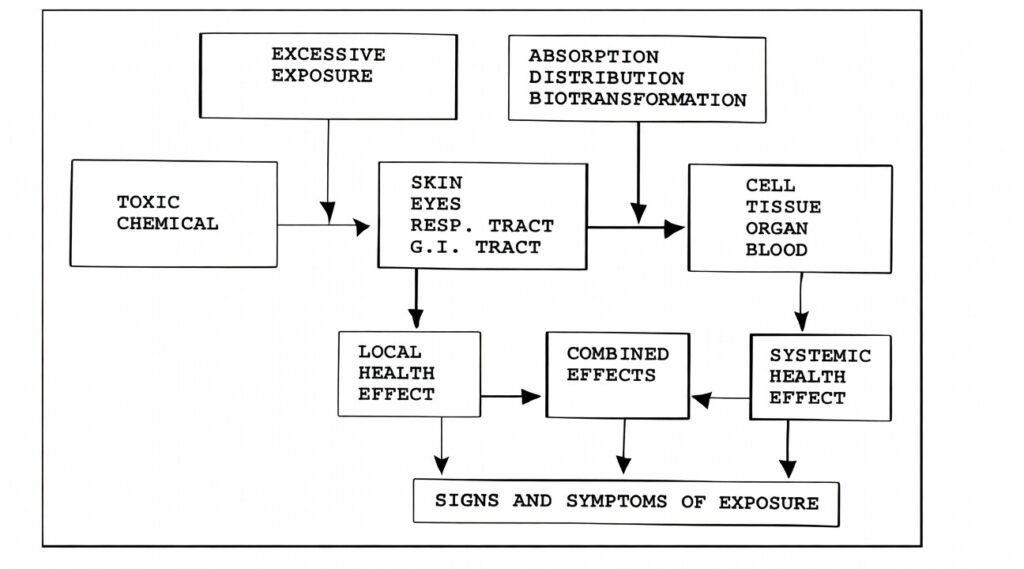
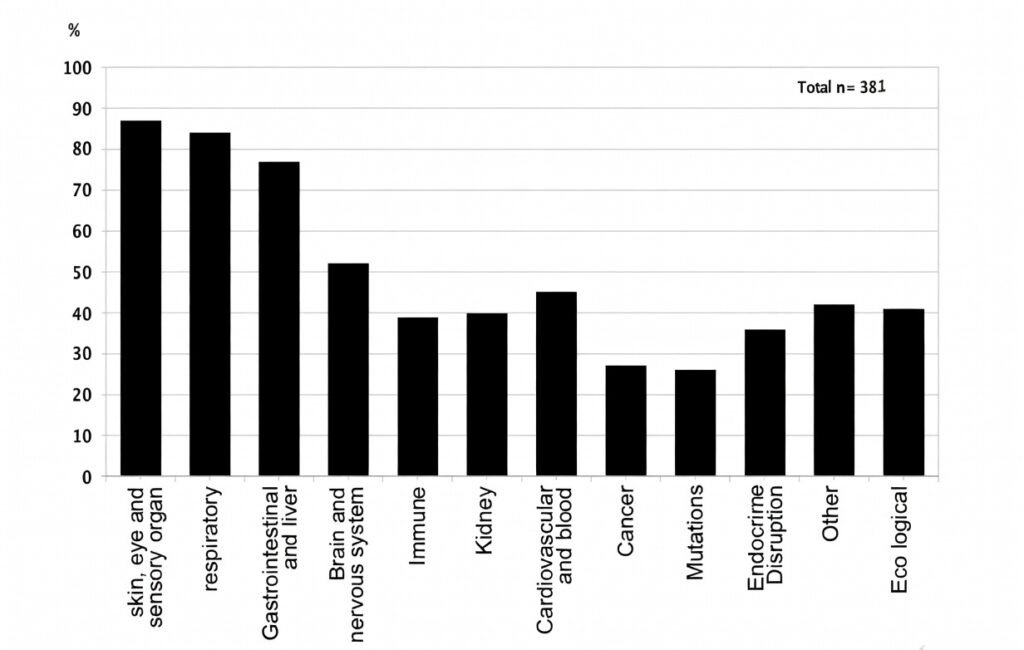
Toxic Effects There are many chemicals transported by sea that can be hazardous. However, in order for them to affect your health, they must contact the body or be absorbed into the body. When assessing the potential health effects from working with a particular material it is necessary to understand difference between “toxicity” and “hazard”.
TOXICITY is the ability of a substance to produce an unwanted effect when the chemical has reached a sufficient concentration at a certain site in the body. The more toxic a material is, the smaller the amount of it necessary to be absorbed before harmful effects are caused. The lower the toxicity, the greater the quantity of it necessary to be absorbed. The toxicity of a chemical is generally measured by experiments on animals (quite often rats). If it is measured in terms of the amounts of material necessary to cause death in 50% of the test animals. These values are called LD50 (lethal dose) or LC50 (lethal concentration), and are usually given in weight of material per kg of body weight or airborne concentration of material per set time period respectively.
HAZARD is the probability that this concentration in the body will occur. Toxicity is an inherent property of the material. A material may be very toxic, but not hazardous, if it is handled properly and is not absorbed into the body. On the other hand, a material may have a very low toxicity, but be very hazardous.
Environmental Hazards
Pollution should be defined and discussed by the Instructors. Trainees should be made aware that tankers are a major source of marine pollution. Various effects of pollution on the environment should be discussed.
Carriage of chemicals in bulk is covered by regulations in SOLAS Chapter VII – Carriage of dangerous goods and MARPOL Annex II – Regulations for the Control of Pollution by Noxious Liquid Substances in Bulk. Both Conventions require chemical tankers built after 1 July 1986 to comply with the International Bulk Chemical Code (IBC Code), which gives international standards for the safe transport by sea in bulk of liquid dangerous chemicals, by prescribing the design and construction standards of ships involved in such transport and the equipment they should carry so as to minimize the risks to the ship, its crew and to the environment, having regard to the nature of the products carried.
The basic philosophy is one of ship types related to the hazards of the products covered by the Codes. Each of the products may have one or more hazard properties which include flammability, toxicity, corrosivity and reactivity. The IBC Code lists chemicals and their hazards and gives both the ship type required to carry that product as well as the environmental hazard rating. Chemical tankers constructed before 1 July 1986 should comply with the requirements of the Code for the Construction and Equipment of Ships Carrying Dangerous Chemicals in Bulk (BCH Code) – the predecessor of the IBC Code.
Reactivity Hazards
The Instructors should give details of various reactivity hazards of a sample cargo. USCG compatibility chart can be referred to and trainees may be required to find out the compatible groups.
A chemical may react in a number of ways; with itself, with water, with air, with other chemicals or with other materials.
Self-reaction The most common form of self-reaction is polymerisation. Polymerisation generally results in the conversion of gases or liquids into viscous liquids or solids. It may be a slow, natural process which only degrades the product without posing any safety hazards to the ship or the crew, or it may be a rapid, exothermic reaction evolving large amounts of heat and gases. Heat produced by the process can accelerate it. Such a reaction is called a run-off polymerisation that poses a serious danger to both the ship and its personnel. Products that are susceptible to polymerisation are normally transported with added inhibitors to prevent the onset of the reaction. An inhibited cargo certificate should be provided to the ship before a cargo is carried. The action to be taken in case of a polymerisation situation occurring while the cargo is on board should be covered by the ship’s emergency contingency plan.
Reaction with Water Certain cargoes react with water in a way that could pose a danger to both the ship and its personnel. Toxic gases may be evolved. The most noticeable examples are the isocyanates; such cargoes are carried under dry and inert condition. Other cargoes react with water in a slow way that poses no safety hazard, but the reaction may produce small amounts of chemicals that can damage equipment or tank materials, or can cause oxygen depletion. Certain chemical cargoes, mostly ethers and aldehydes, may react with oxygen in air or in the chemical to form unstable oxygen compounds (peroxides) which, if allowed to build up, could cause an explosion. Such cargoes can be either inhibited by an anti-oxidant or carried under inert conditions.
Reaction with Other Cargoes The materials used in construction of the cargo systems must be compatible with the cargo to be carried, and care must be taken to ensure that no incompatible materials are used or introduced during maintenance (e.g. by the material used for replacing gaskets). Some materials may trigger a self-reaction within the product. In other cases, reaction with certain alloys will be non-hazardous to ship or crew, but can impair the commercial quality of the cargo or render it unusable.
Corrosion Hazards
Acids, anhydrides and alkalis are among the most commonly carried corrosive substances. They can rapidly destroy human tissue and cause irreparable damage. They can also corrode normal ship construction materials, and create a safety hazard for a ship. Acids in particular react with most metals, evolving hydrogen gas which is highly flammable. The IMO Codes address this, and care should be taken to ensure that unsuitable materials are not included in the cargo system. Personnel likely to be exposed to these products should wear suitable personal protective equipment.
Explosion and Flammability Hazards Flammability
When petroleum or a chemical is ignited, it is the gas progressively given off by the liquid which burns as a visible flame. The quantity of gas available to be given off by a liquid depends on its volatility which is frequently expressed for purposes of comparison in terms of Reid vapour pressure. A more informative measure of volatility is the true vapour pressure but unfortunately this is not easily measured.
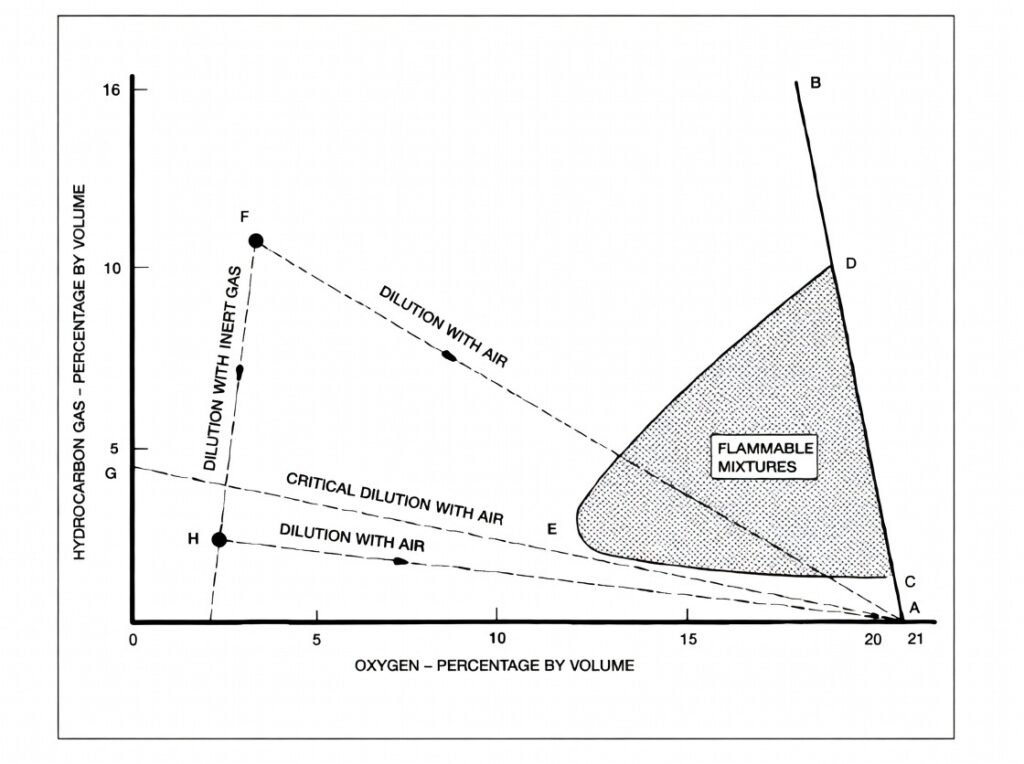
Vapours can be ignited and will burn only when mixed with air in certain proportions. If there is too little or too much vapour the mixture cannot burn. The limiting proportions, expressed as percentage by volume of petroleum gas in air, are known as the lower and upper flammable limits. They vary amongst the different possible components of chemical vapours. For the gas mixtures from the petroleum liquids encountered in normal tanker practice the overall range is from a minimum lower flammable limit of about 1 % gas by volume in air to a maximum upper flammable limit of about 10% gas by volume in air. For Chemicals the LFL and UFL vary enormously and must be checked from its MSDS sheets prior loading.
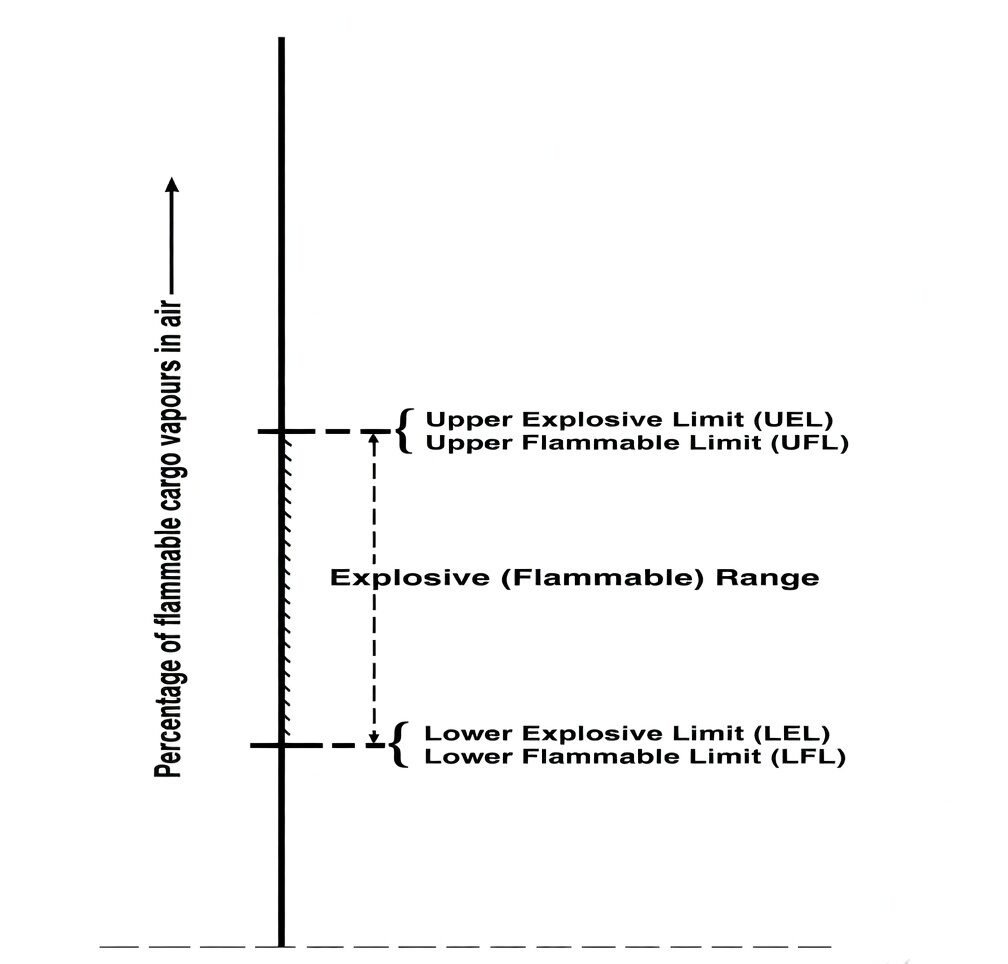
 The Instructors should sketch and explain the flammability diagram for oil and chemicals separately showing the differences in LFL and UFL. The trainees should also be explained that some chemicals may have oxygen inherently in its compound and may be flammable and needs to be loaded with padding.
Sources of Ignition, Including Electrostatic Hazards
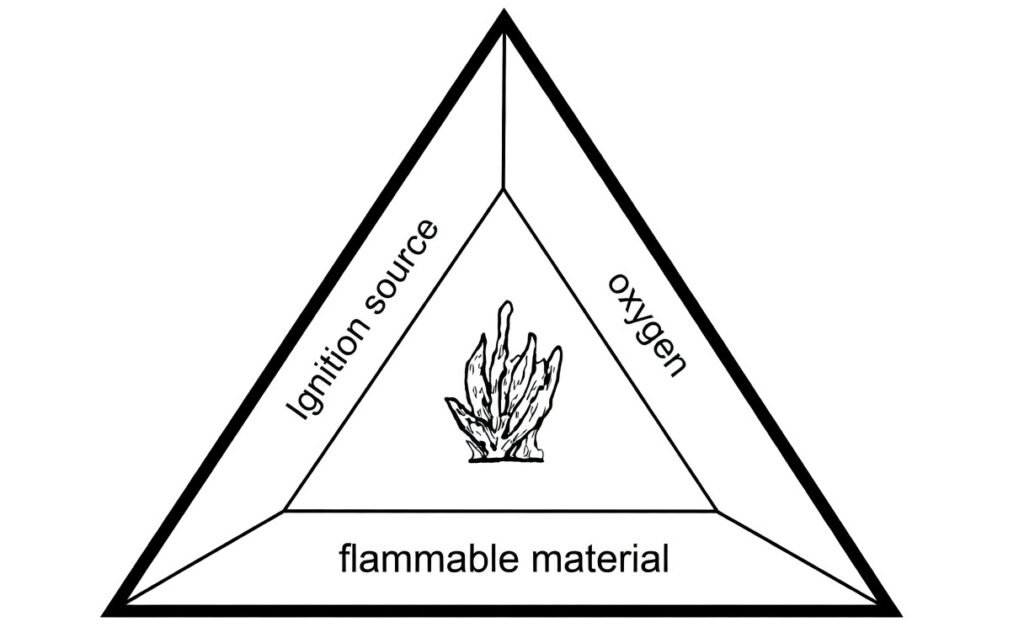
The Instructors should explain with a fire triangle stating that one side which can be controlled to prevent or put off a fire may be the source of ignition. The following are major sources of ignition:
- direct heat from a flame light, spontaneous combustion, Auto ignition etc.
- mechanical sparks from frictional sparks when chipping or scraping.
- chemical energy from aluminum in contact with steel
- electrical energy from electrical sparks
- electrostatic discharge
Static electricity presents fire and explosion hazards during the handling of petroleum, and tanker operations. Certain operations can give rise to accumulations of electric charge which may be released suddenly in electrostatic discharges with sufficient energy to ignite flammable hydrocarbon gas/air mixtures; there is, of course, no risk of ignition unless a flammable mixture is present. There are three basic stages leading up to a potential static hazard: charge separation, charge accumulation and electrostatic discharge. All three of these stages are necessary for an electrostatic ignition.
Toxicity Hazards General Concepts and Effects of Toxicity
The toxic effects should be dealt with at some length to ensure that the trainees have a good appreciation of the dangers and hazards due to oil, and chemicals. Acute poisoning occurs when a large dose is received by exposure to high concentrations of a short duration, i.e. a single brief exposure. Chronic poisoning occurs through exposure to low concentrations over a long period of time, i.e. repeated or prolonged exposures.
Toxicity is objectively evaluated on the basis of test dosages under controlled conditions, and expressed as threshold limit values (TLVs). Threshold Limit Value (TLV) means the “Time Weighted – Average (TWA)” concentration of a substance to which it is believed workers may be repeatedly exposed, for a normal 8 hour working day and 40 hour working week, day after day, without adverse effect. It may be supplemented by other limits.
Prevention of exposure is achieved through a combination of cargo containment, which prevents toxic fumes or liquid from contaminating the workplace, and the use of personal protective equipment (PPE).
To ensure safety on board one must adhere to the following points:
- knowledge,
- training and
- strict routine.
It is a clear responsibility for the Owner, the master and the officers to inform their personnel about the cargoes to be carried, safety procedures etc and to arrange for the proper training. Information should be given partly in the form of written notices combined with informal meetings with the entire crew present when new cargoes are to be loaded or when inexperienced personnel are to be signed on.
Among other things the following information should be given:
i. Cargoes to be loaded; their characteristics as regards handling, pumping, toxicity, corrosiveness, first aid etc.
ii. The cargo loading plan to be posted in places where it will be clearly seen by everyone on board and at the accommodation ladder, when in port.
iii. Post cargo information cards for products to be loaded or are contained on board. For “new” products ask the shipper for safety brochures and leaflets.
iv. the personal safety equipment to be used by those involved in cargo handling, pumping, sampling etc.
v. Have available on board literature on chemical cargoes, medical advice etc.
vi. Inform in particular if the cargo to be loaded has an odour threshold which is higher than the TLV-value. Of, and that danger cannot always be sensed in advance (e g. carbon tetra chloride, ethylene dichloride etc).
vii. Most hydrocarbon vapours are heavier than air and have a tendency to accumulate in lower spaces. Therefore work below gratings in pump rooms, cofferdams, pipe tunnels etc is extra dangerous.
viii. Never take work clothes into your cabin! Soiled clothes must be washed before being used again or in the case of toxic products, destroyed.
ix. Wash your hands before meals!
x. Give information about fire fighting methods for each type of cargo on board.
xi. Give information if the cargo is water-reactive or reactive to other cargoes on board. Give information on segregation required.
xii. For some very toxic cargoes mouth to mouth artificial breathing might be dangerous to the rescuer (e.g. acrylonitrile, acetone etc).
xiii. Information must be given particularly if the cargo danger lies primarily in vapour inhalation (e.g. acrylonitrile, trichloroethylene) or skin contact (e.g. phenol, caustic soda, sulphuric acid).
xiv. State where eye washing bottles are located (deck office, at cargo manifolds on deck, in pump rooms, on fore deck etc).
xv. Insist on that nobody should work with cargo gear without anyone standing by. Have people report when going to and returning from pump rooms!
xvi. Give information if any cargo is so toxic that an escape breathing mask must be used in an emergency.