
Flooding is one of the most dangerous emergencies that can occur onboard a ship, particularly when it affects the engine room. Since the engine room houses the ship’s propulsion machinery, electrical generation systems, and many essential services, flooding in this area can disable the vessel’s entire life-support and operational systems.
Whenever flooding occurs, immediate action is necessary to prevent further water ingress, maintain the ship’s stability, and protect the lives of everyone onboard.
The following general actions should be taken:
- Stop the engines if necessary and sound the general emergency alarm.
- Check the soundings of all double-bottom tanks, ballast tanks, and cofferdams to determine the extent of flooding.
- Close all watertight doors and hatches to contain the flooding.
- Assess hull damage and evaluate the ship’s stability.
- Pump water out of the flooded compartments using available bilge and emergency pumping systems.
- Take every possible measure to control or stop further flooding.
- Assess the impact of flooding on cargo and ship operations.
- Prepare survival craft and carry out any additional emergency procedures if the situation worsens.
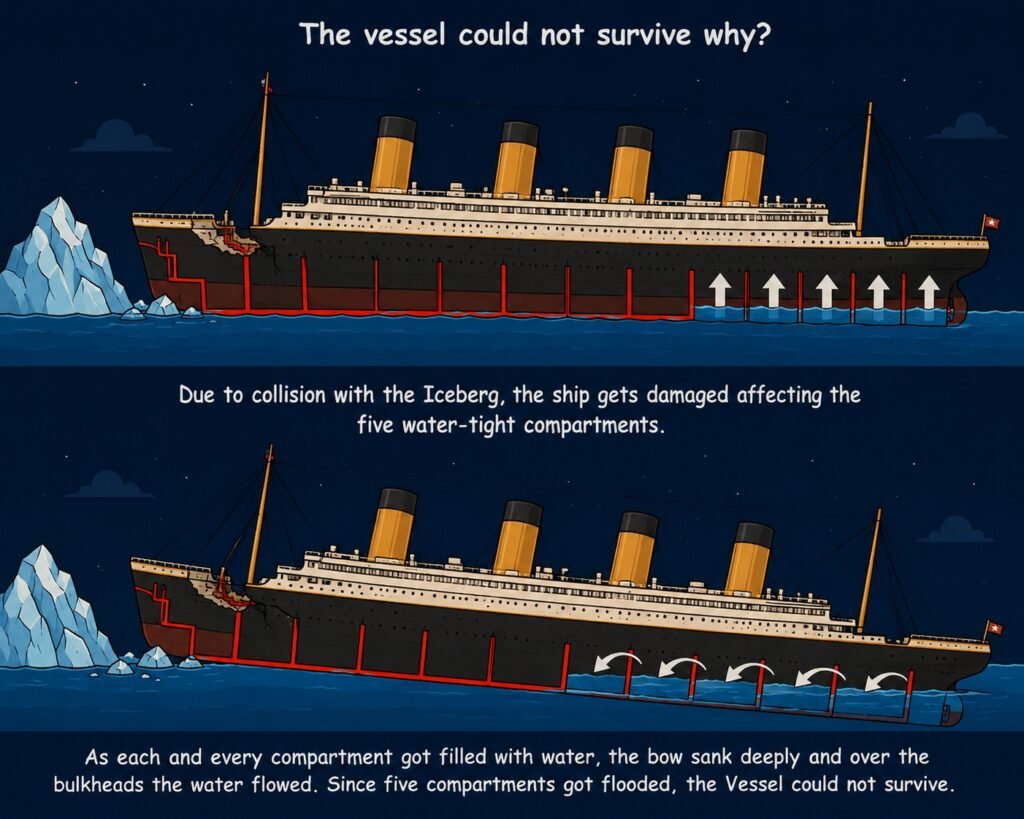
Whenever water enters any compartment, the ship’s Flooding Checklist should be followed carefully. A thorough investigation should then be carried out to identify the source of the flooding and determine whether the vessel remains safe to continue operating.