In extremely serious emergencies, the Master may determine that the ship can no longer be occupied safely and issue the order to Abandon Ship. Since a ship provides shelter, power, communication, food, water, and other life-support systems, abandoning it is always considered the last available option. Such a decision is only taken when remaining onboard presents a greater danger than leaving the vessel.
Situations that may require abandoning the ship include severe collisions, uncontrollable fires, explosions, structural failure, uncontrollable flooding, or other emergencies that threaten the safety of everyone onboard.
The actions taken by the crew will depend on the specific circumstances of the emergency. Whenever there is a possibility that the ship may have to be abandoned, every crew member should immediately collect their immersion suit and properly wear a securely fastened lifejacket. A correctly fitted lifejacket is essential because attempting to adjust loose straps while immersed in cold water is extremely difficult due to reduced hand movement and numbness.
Survival craft are specifically designed to preserve human life after abandoning a vessel. These include open lifeboats, totally enclosed lifeboats, free-fall lifeboats, inflatable liferafts, and davit-launched liferafts. Rescue boats are intended primarily to recover survivors from the water and assist in organizing and towing survival craft to safer locations.
The most effective way to improve survival at sea is through thorough preparation and continuous training. Since conducting real abandonment exercises by sinking a ship is impossible, realistic drills provide the practical experience necessary for crew members to develop confidence and competence.
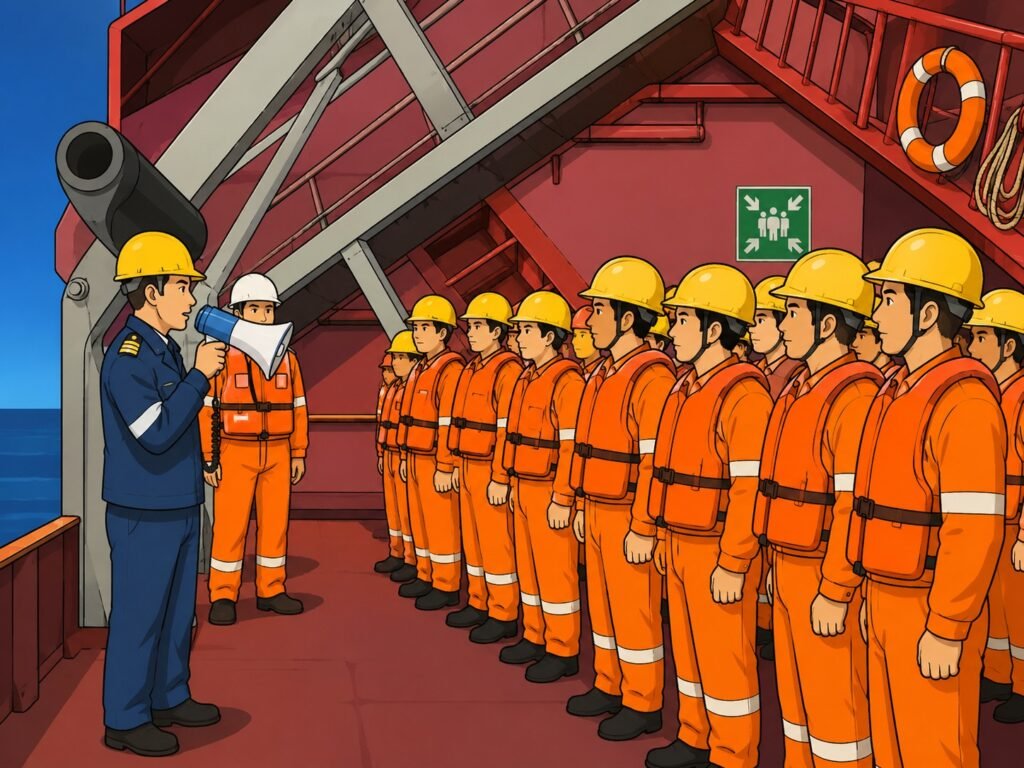
Crew members should participate seriously in all scheduled emergency drills. During drills, they should report to their assigned stations fully clothed, wearing suitable footwear, carrying their immersion suits, and wearing or preparing their lifejackets exactly as they would during an actual emergency.
When the command “Prepare to Abandon Ship” is announced together with the prescribed emergency signal, the crew immediately begins a carefully planned sequence of actions. Personnel proceed to their assigned muster stations, bring the equipment listed on the Station Bill, and prepare survival craft for launching. If time permits, the immersion suit should be worn first while keeping the lifejacket readily available.
Survival craft should be readied for launching according to established procedures. However, no lifeboat or liferaft should be launched until the Master gives the official “Abandon Ship” order. Crew members should remain calm, organized, and prepared to follow further instructions.
Once the order is given, survival craft should be launched in an orderly manner. Personnel should board using embarkation ladders whenever possible instead of jumping into the water. After boarding, survival craft are normally secured together and towed away from the vessel by a motor lifeboat or rescue boat while remaining near the ship’s last known position to facilitate search and rescue operations.
While awaiting rescue, survivors should maintain continuous visual observation and radio communication whenever possible. Lifeboats and liferafts are equipped with food, fresh water, medical supplies, communication equipment, and survival equipment that should be carefully conserved, as rescue operations may take considerable time.
A ship may become unsafe at any time due to numerous operational hazards. Therefore, emergency preparedness is achieved through continuous training and regular drills. Abandon ship drills provide crew members with the opportunity to practise emergency procedures, become familiar with their assigned responsibilities, and develop the confidence required to respond quickly and effectively.
Training should not be regarded merely as a regulatory requirement but as an essential learning process that strengthens the crew’s ability to manage real emergencies safely. Drills should be conducted at a controlled and safe pace to minimize the risk of injuries while allowing participants to fully understand each step of the procedure. Short pauses may be incorporated during training sessions to explain the purpose of various actions, ensuring that all personnel clearly understand their responsibilities.
The experience, knowledge, and confidence of the crew should always be considered when planning emergency drills. Continuous onboard training, combined with the knowledge gained ashore, plays a vital role in developing competent, confident, and safety-conscious seafarers who are fully prepared to respond effectively to emergencies at sea.