Head injuries
Head injuries commonly result from blows or falls, often from height.
Most preventable deaths from serious head injuries are due to obstructed or impaired breathing rather than direct brain damage. Apart from covering wounds, priority should be given to maintaining clear and effective breathing to ensure adequate oxygen supply to the brain. This greatly increases the chances of survival until professional medical care is available. Obtain RADIO MEDICAL ADVICE.
Refer to the section on assessing head injuries for more details.
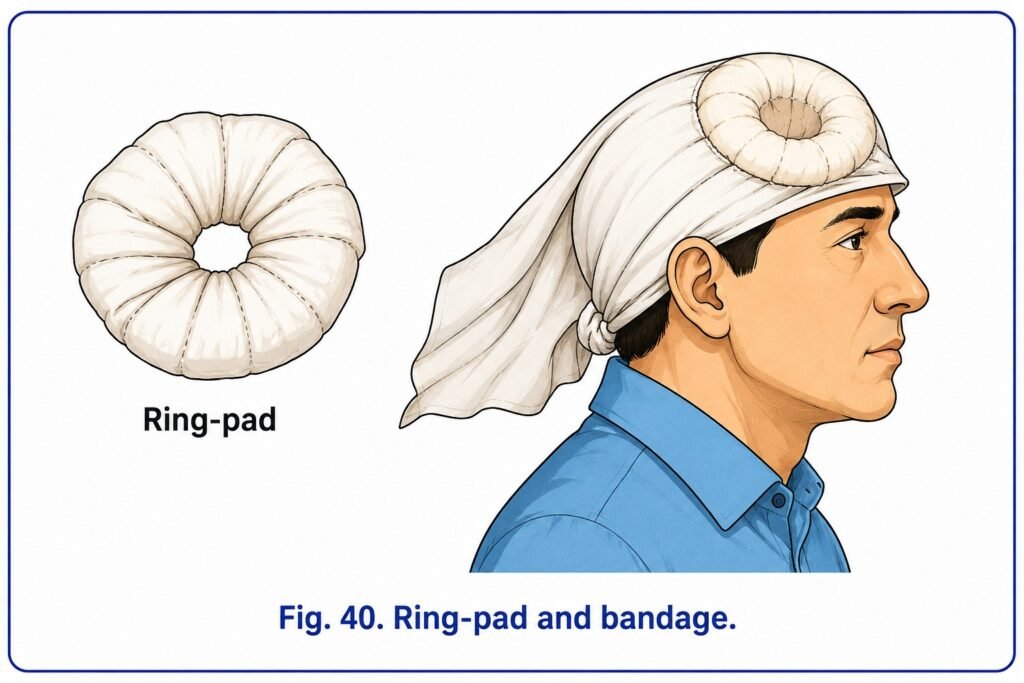
In some cases, bleeding from a head wound cannot be controlled with direct pressure, especially if a fracture or foreign object is present. In such cases, a ring pad should be used.
Place a paraffin gauze dressing over the wound, then position a ring-shaped pad around it and secure it with a bandage. The pad should apply pressure to surrounding blood vessels but not directly on the wound, fracture, or foreign object.
A ring pad can be made by wrapping a bandage around the fingers to form a ring, then covering it to create a doughnut-shaped pad.